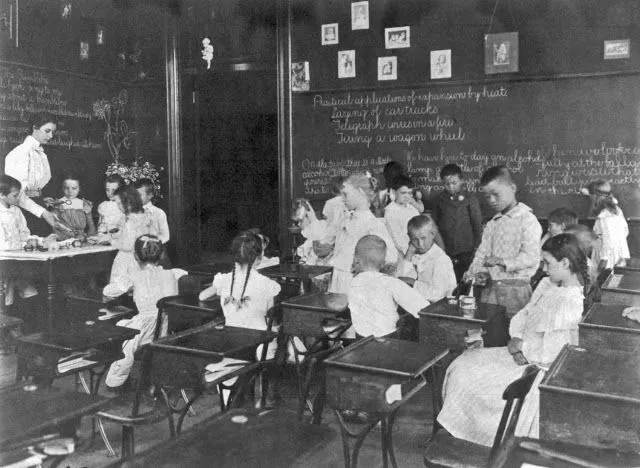
The Dark Secrets of Schooling! You need to know!
Jul 04, 2025Believe it or not, the schools of today that seem so common place and accepted widely across the world, went through many iterations and faced much opposition. In this article, I will focus on America. America is possibly the best and most prominent example of modern education in the Western world. Here, we get a clear picture of mandatory schooling and its effects on the progress and advancement of individuals. Originally, schooling was supplementary to Family, church, and real-life opportunities i.e. apprenticeships, and employment.[1] Now however, it’s seen as one of the primary aspects towards future opportunities. No longer is the focus placed on good character, critical thinking, social status and networking. Which still play a large role in people’s success today. Instead, children are encouraged to memorize and regurgitate ‘facts’ and ‘theories’ that fit the current or recent knowledge of society.
Children undergo rigorous testing throughout their schooling career. These test scores are averaged and determine the institutions ranking against other schools. These tests don’t necessarily prove a child is understanding, or retaining the information long term. When we truly consider what school actually teaches children, and the lack of preparedness that most graduates face when entering the ‘real world,’ it makes one question, why we would send children to school in the first place!
Schooling vs Education
School is, by many, seen as synonymous with education though the two are vastly different. Education is received by all, in all manors of ways regardless of location, culture, formality, or tradition. School is a particular way or type of educating. Everyone must and does undergo a learning process or education in order to function and survive in life and the world. Though the various kinds of education may be looked at differently depending on who you are and what you have personally experienced. There is no denying that each form is a learning process. Some may discard the significance or validity of different learning traditions. For example, if you have been to an ivy league school like Harvard or Yale you might view other ways of teaching as primitive. Such as the handing down of knowledge through story, as was the case in Aboriginal culture and Indian American culture.
Likewise, those cultures that share knowledge through story, may have looked upon schooling in the Western world as ridged and lacking spirit. We might also look at homeschooling or home-education, where parents take the responsibility of teaching their children. Homeschooling families might view modern schools similar to a production line in a factory, with the children void of individuality. While those who participate in schooling may view the home-educated as weird and socially inept. Regardless of one’s views, these different forms of education expose a deeper, richer and at times calculated nature of humanity, which I will discuss in the paragraphs to come.
Mandatory Schooling’s Unfavorable Beginning
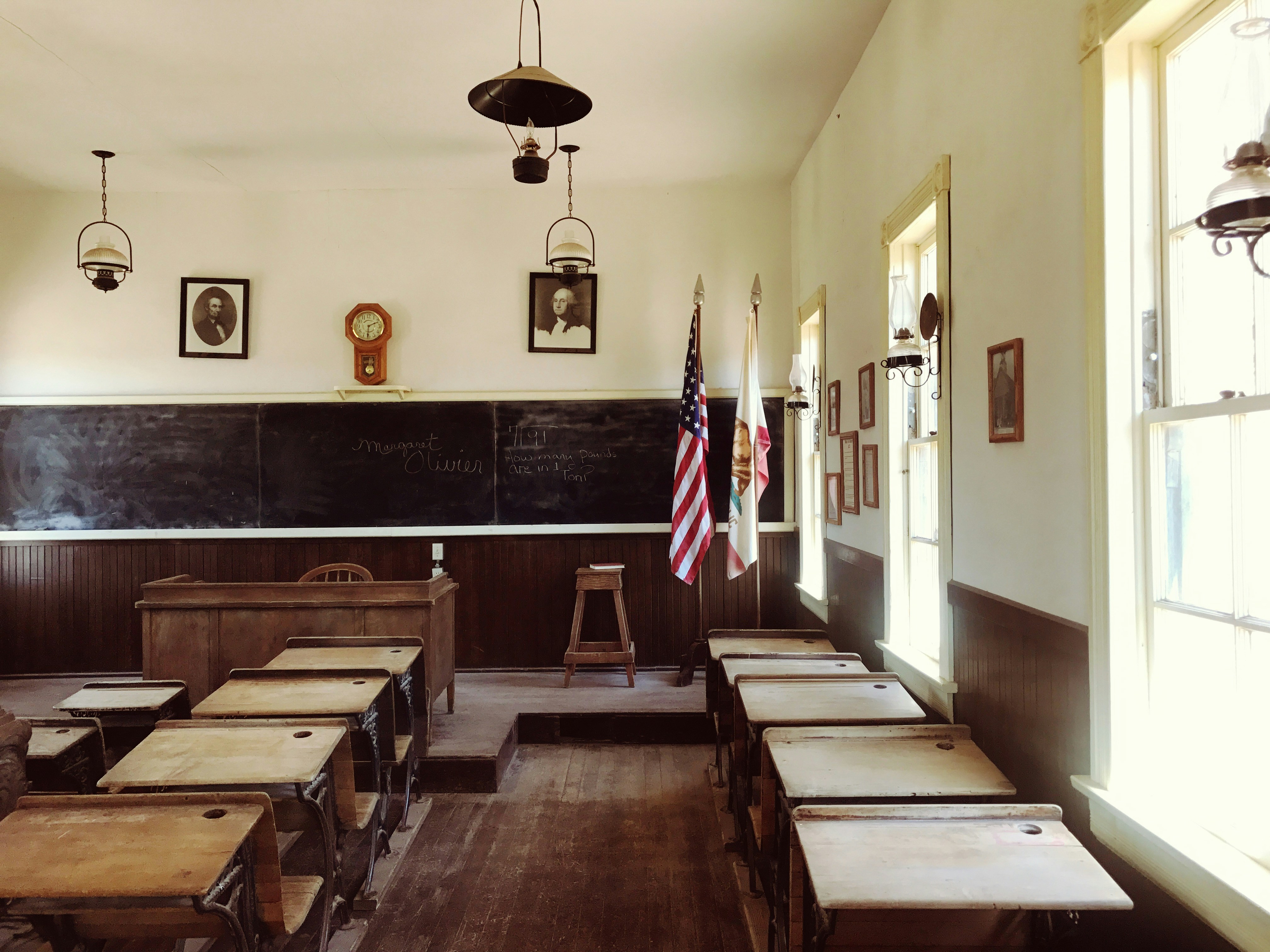
There was once a time when the public showed a violent disliking for mandatory schooling. When such schools were first created and enforced. In 1852, the state of Massachusetts became the first US state to enact a Compulsory Education Law. It had already passed a similar law in 1647 when it was still a British colony.
The 1852 law required every city and town to offer primary school, focusing on grammar and basic arithmetic. Parents were fined if their children didn’t attend school and some children were even taken away from non-compliant parents. Stripping them of their parental rights. Their children were given to farmers or mechanics as apprentices.[2] Across the states, parents, students, and country folk alike formed angry mobs and drove teachers out of town, setting the school buildings ablaze in protest.[3] Students who were held back after school hours (in detention) were commonly broken out by their parents. This should not come as a surprise.
The American Spirit
After the American Revolution, the spirit of freedom and self-determination was strong in the American people, they were acutely aware of the risks of centralized power and the overstep of governing bodies. Many Americans, after declaring themselves free from the British crown weren’t happy when they saw the (1789) drafted constitution. A great debate broke out between what we know today as The Federalists and The Anti-Federalists. The Federalists wanted the constitution ratified with a strong centralized government. The Anti-Federalists, wanted to protect personal liberties and keep power with the states. The arguments of both sides can be found in a series of essays by the same names.[4] In the end, majority of colonies would not ratify without a proposed Bill of Rights,[5] to protect their personal liberties. (read more about the American Spirit here >)
Conflicted Over Education
Between 1780 and 1830 the American people were conflicted about how to educate children. Up until the 1840’s, the school system was mainly private, decentralized, and home schooling was common. Americans were mostly well educated and literacy rates were high even in poorer communities. Still, there was a push by some religious and elite groups to have a schooling system. The prevailing sentiment of the time, was that the idea of implementing mandatory schooling would be an overstep of authority. Much like the constitution without a Bill of Rights.
Until the advent of this type of schooling, parents had control over their children’s education. The more affluent families would send their children for private tutoring or private schooling for a fee, not dissimilar to the practices of the upper class in modernity. Many people were in favor of this autonomous system. The push for education reform that culminated in the form of forced schooling proved to be problematic.[6] However, this mandatory form of schooling is the system we use today, but why?
Schooling the Native Americans
To truly understand the intentions behind modern schooling, let us first take a look at what happened to the Native Indian American children in 1897. In an attempt to blot out their culture and have them assimilate into Anglo culture, Native Indian American children were often forcibly removed from their families and taken to government funded boarding schools.[7] There was an assumption that the colonists were superior and the Indians were savage and uncivilized, in need of proper training.[8] In 1897 Richard Henry Pratt, a US Army Lieutenant, founded the Carlisle Indian Industrial School. Pratt said:
“A great general has said that the only good Indian is a dead one… In a sense, I agree with the sentiment, but only in this: that all the Indian there is in the race should be dead. Kill the Indian in him, and save the man.”[9]
In 1875 prior to the schools founding Pratt ran a program to assimilate Native Americans into white culture while supervising prisoners at Fort Marion in St. Augustine, Florida. He used his findings and successful practices from the program, in the boarding school.
Cultural Genocide
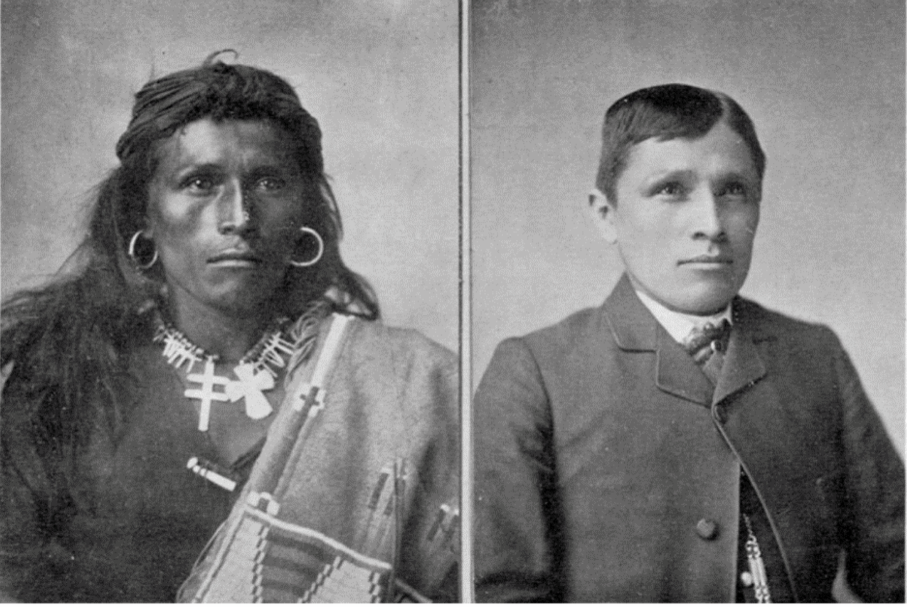
After the Civilization Fund Act of 1819,[10] Christian missionaries had been a large part of building boarding schools and developing curriculum for Indian students; even making dedicated school days and times in white schools for Indian students, with the primary focus being on evangelism rather than assimilation into American society. After the Removal Act of 1830,[11] and the encouragement of prominent figures such as Pratt, the aims of these schools slowly changed to complete re-education and assimilation. This aim was achieved through the removal of any reminders of Native culture. Upon their arrival, children had their pictures taken; before they were stripped of their tribal clothes, and affiliated items; such as medicine bags, jewelry and ceremonial items.
After the children had all physical demarcations of their tribal affiliation removed, the boy’s had their hair cut short and were dressed in military uniform. While the girls were forced into skirts and corsets to fit the popular American fashion.[12] To complete their transformation and the annihilation of the Native Indian Cultural Identity, they were given new Anglican names and forced to be photographed once more. These before and after photographs were used as proof that Native Americans were able to look American and were, therefore, able to integrate into American society if given the proper instruction and education.[13]
The New Religion
There is a gross misconception that schooling in its current form was designed to educate children in the necessities for success in a career and adulthood. That we have somehow evolved and developed a better, more efficient education system through schooling than before. This idea of advancement and superiority that one generation feels they have over the last, has been going on for centuries, and at great detriment to the betterment and innovation of human kind. Education has also not been an area of interest for a great number of historians until recently.[14] The history of Education was given little time or thought, with the focus instead, being on curriculum reform, and classroom management.
Scientific Management
Scientific management also known as Taylorism, refers to management techniques aimed at maximizing productivity, particularly in the manufacturing industry.[15] The idea was to streamline production through standardized practices to maximize profits and lower time and cost. Such practices would undergo scientific study to ensure the most efficient and simplistic practices possible, so anyone could follow the procedures with precision.[16] This would ensure a constant flow of workers capable of the segmented tasks. Tasks that had been broken down to their simplest components.
Schooling for Social Efficiency
John Franklin Bobbit, strongly advocated for the introduction of scientific management techniques and practices into schools. Such practices were to deal with the mounting problems schools faced with increased student numbers, inefficient use of funding, and inadequate staffing.[17] Daily scheduling and timetables were implemented, staff numbers were cut down, and waste was eliminated through efficient budgeting.
“Social efficiency educators applied the effectiveness verification system of input to output in education. In this fashion, what students knew was recognized as less valuable than what they could do with what they knew—social utility— which became the most important criterion to examine the role of the school curriculum.”[18]
We could very well change the phrase ‘social utility’ to ‘industry ready’ because essentially it wasn’t about equipping children with knowledge they could utilize in unique endeavors. Rather, it was about equipping them with specific knowledge so they could fulfil the requirements of industry in the economy.
The Flawed Standardized Test
Scientific management practices were fairly integrated into educational institutions by 1930. At this time standardized testing, and IQ tests were introduced to measure student characteristics including intelligence. These testing practices were heavily influenced by Edward Lee Thorndike who said there were “scales for everything in human nature.”[19] Suggesting that we can measure all human characteristics in an observable form. This idea became more popular in the 20th century. Furthermore, the implementation of these management practices resulted in more power going to the state through the control of education.[20] Teachers were likewise guided by the state. William Chandler Bagley, author of Curriculum Management, “argued that the first rule teachers must follow for effective education is ‘unquestioned obedience’ (p. 74).”[21]
The teachers, were to control the students and have them follow every instruction; molding them to be obedient to their superiors. The state also hired and encouraged, “efficiency experts” to craft educational policies. These policies were approached with an industrial management perspective.[22] These ‘efficiency experts’ were economists, statisticians, and management consultants. Involved in the overall process of collecting data, figuring out problems, and proposing reform and change agendas for schools.[23] Standardized tests were an essential part of this performance review for schools in the 1930s, and beyond.[24]
The Gold Standard
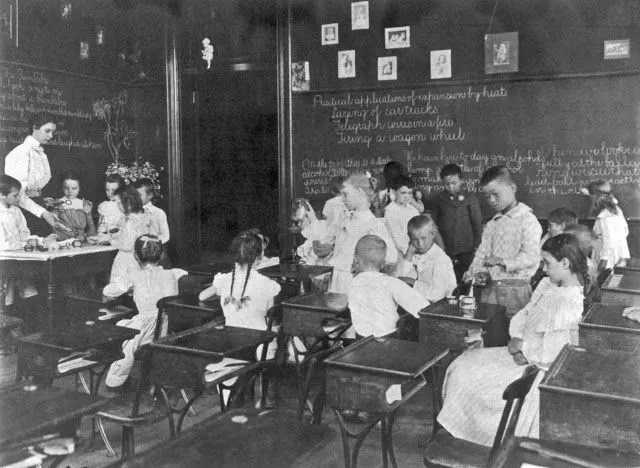
Scientific management became the golden standard for school and industry processes, promising efficiency and bigger profit margins. The teachings of school also resulted in The True Believe.[25] People who believe so heavily in the institution of school that they advocate for it and its practices regardless of any personal or public harm that may be caused. There have been few outliers except for such educators as John Taylor Gatto,[26] and John Holt.[27] Both of whom attempted to spear head education reform, encourage home education, and share their research into the origins of the modern schooling system.
Gatto explains that most ‘good teachers’ the ones who try to make school better, end up getting shut down and pushed out of the very schools they’re trying so desperately to help. Both Gatto and Holt shared their disdain for standardized testing and how such tests fail to accurately show a child’s full capabilities. They suggest these tests hinder the child’s growth and individuality. Of course, this makes sense when we consider that the tests were made to assess the educational institutions themselves. To test how effective the teaching is in building skills that the “efficiency experts” and state decide the economy requires.[28]
Schooling the Great Assimilation Project
Schooling hasn’t really evolved from the Native American boarding houses that trained students to assimilate into American society. The schools of today train their students to conform, providing industry with a solid foundation in which to shape the ideal worker. Throughout their institutionalization students are taught enough of the basics to be able to follow instruction and fulfill their role in the scientific management designed process. The industrial boom needed workers, not individuals inspired to make a name for themselves and start their own businesses. Industrial tycoons of the 20th century were aware that their continued wealth would require continual growth and a willing workforce. Carnegie stressed the importance of an ever-growing company, in his essay ‘The Gospel of Wealth,’ insisting that stagnation and decreased growth, leads to bankruptcy and the death of the company.[29]
The Evolution of Public Sentiment Toward Schooling
Before the industrial revolution, schooling was seen as a possible place to learn but not a necessity for success. Most schools were private and expensive though more affordable options were available in some states and cities. New York in 1790, for example, made free schools available for the poor, as well as schools for the working class.[30] Schooling was seen mostly as a place to train children from a young age in ‘good character,’ so they could be good citizens.[31]
Many religious leaders i.e. Catholics, reformers and Calvinists,[32] believed that their particular doctrine was the correct one and therefore needed to be spread and shared to save souls for God’s kingdom (so “false doctrines” didn’t lead people astray.) Catholics had established schools before the reformation. Still, the reformation brought new ideas and institutions contrary to the establishment’s doctrine of the day. Both groups believed however, that through schooling and missionary lead teaching, children would be trained to better control their sinful nature, and that by evangelizing children at a young age, children would remain faithful to God into adulthood.[33]
Proverbs 22:6 speaks to this idea: “Train up a child in the way he should go: and when he is old, he will not depart from it.”[34] Schools were seen as an opportunity to spread the word of God and bring children to Christ.[35] Educators focused on teaching children philosophy, history, economics, geography and good character, making their pupils well versed in business, finance, politics and the use of precious resources.
Enlightenment Doesn’t Mean Better
A juxtaposed view to the religious ideas of schooling practices was that of the Enlightenment Era (from the late 17th to the early 19th century). Which focused more on reason and systems, like the scientific management we discussed. They believed that the state needed control over children; their education, and their circumstances.[36] The idea saw science as a kind of new religion, and mass education as a tool to create scientific management practices and a compliant labor force.[37] Using this idea in schooling resulted in a larger divide between the wealthy and the rest of the population.
The larger population was to be taught in mandatory institutions, schools, run and controlled by the state, and funded by taxpayer dollars. This led to civil unrest as the public were unwilling to pay higher taxes for the sake of state mandated schools. In 1920 propaganda techniques developed in World War I, were adopted by schools to try and increase public support.[38] These campaigns worked to an extent, though there were still prominent figures speaking out against schooling.
Public Opinion not Favorable to Schooling
H. L. Mencken, in 1924 wrote in The American Mercury;
“The aim of public education is not to spread enlightenment at all; it is simply to reduce as many individuals as possible to the same safe level, to breed and train a standardized citizenry, to put down dissent and originality. That is its aim in the United States, whatever the pretensions of politicians, pedagogues and other such mountebanks, and that is its aim everywhere else… Their purpose, in brief, is to make docile and patriotic citizens, to pile up majorities, and to make John Doe and Richard Doe as nearly alike, in their everyday reactions and ways of thinking, as possible.”[39]
Perhaps this sounds rather conspiratorial and elaborate, given the quoted words are from a renowned journalist (also known for his racist views which I will cover in a later article.) However, his words just affirm the words of many before and after his time. A centralized education system is but a machine to control the public, assimilating the masses into an industrialized society under the control of government and business. The Native Indian Americans are a great example of this assimilation process and symbolize the mentality behind the forced schooling system at large.

Washington’s Advice to the Next Administration
In Washington’s Farewell Address of 1796, George Washington outlined numerous suggestions for the government ahead. One of them was very tailored toward schooling and equipping them with the right knowledge. Washington stated:
“Promote then, as an object of primary importance, institutions for the general diffusion of knowledge. In proportion as the structure of a government gives force to public opinion, it is essential that public opinion should be enlightened.”[40]
The public, Washington suggests, is in need of enlightenment through some kind of institution i.e. schooling. The public, he points out, will impact government policy and how it functions. Washington had witnessed and been part of the American people’s fight for freedom against the British. He’d witnessed the colonies taking a stand for their liberty through the Bill of Rights. He would have known the people would fight if pushed, even in the face of death to protect their freedom. Such a force of will, needed to be taken into account for the new leadership and his statement would be a sign of things to come.
The Real Aim of Scientific Management in Schooling
Creating a subservient public would become the new target by joining scientific management and forced schooling into one efficient indoctrination machine. Between 1796 and 1897 a great deal went on including the civilization act and removal act that saw many Native Americans die physically or spiritually due to the enforcement of schooling and or the relocation of whole communities to a select territory. This also coincided with changes being made to schooling including the 1852: Massachusetts Passing of the First Mandatory Attendance Law in America. There was a very clear move by the government on a state and central level toward mandating schooling. However, it wasn’t till the 1900s that the mandatory schooling takeover truly took flight.
An industry Tycoon and His Elitist Ideas
In 1913 Rev. Frederick T. Gates, Business Advisor to John D. Rockefeller said:
“In our dream we have limitless resources, and the people yield themselves with perfect docility to our molding hand. The present educational conventions fade from our minds; and, unhampered by tradition, we work our own good will upon a grateful and responsive rural folk. We shall not try to make these people or any of their children into philosophers or men of learning or of science. We are not to raise up among them authors, orators, poets, or men of letters. We shall not search for embryo great artists, painters, musicians. Nor will we cherish even the humbler ambition to raise up from among them lawyers, doctors, preachers, statesmen, of whom we now have ample supply… we will organize our children into a little community and teach them to do in a perfect way the things their fathers and mothers are doing in an imperfect way, in the home, in the shop, on the farm.”[41]
Control Paraded as Charity
To understand the significance of this statement one must have knowledge of the Rockefeller foundation; what they do and what they have done. A great deal of money has passed through the foundation and gone into mandatory schooling, as well as universities, banking (including the Federal Reserve Bank), politics and medicine. In 1902, John D. Rockefeller created the General Education Board, at a cost of $1 million, which was a lot back then. He continued to donate there after, the sums of $10M, $34M and much more have been documented and reported.[41a] The Board provided major funding for schools across the nation, inserting themselves into all facets of education. The Board became very influential in shaping the current schooling system. The Carnegie Foundation for the Advancement of Teaching was founded, in 1905. The following year, 1906, the foundation was chartered by an act of Congress as an Independent Policy and Research Centre called to “do and perform all things necessary to encourage, uphold, and dignify the profession of the teacher and the cause of higher education.”[42]
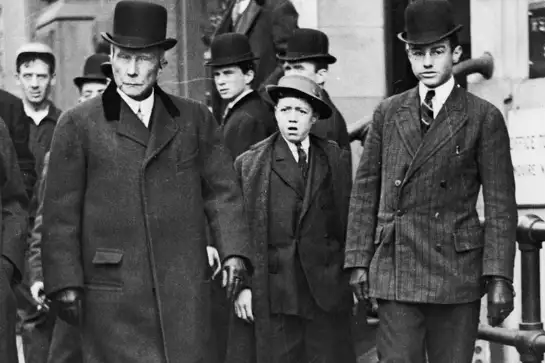
Not Every Organization Was Onboard
At an annual meeting in St. Paul Minnesota in 1914, a resolution was passed by the Normal School Section of the National Education Association or NEA (which had become a federally chartered association in 1906). An excerpt stated:
“We view with alarm the activity of the Carnegie and Rockefeller Foundations — agencies not in any way responsible to the people — in their efforts to control the policies of our State educational institutions, to fashion after their conception and to standardize our courses of study, and to surround the institutions with conditions which menace true academic freedom and defeat the primary purpose of democracy as heretofore preserved inviolate in our common schools, normal schools, and universities.”
The NEA saw the writing on the wall, the direction in which the Rockefeller and Carnegie foundations were taking schooling. By 1918 all states required students to complete elementary school. In 1932 the “Eight Year Study” program was implemented forcing all children to study for eight years. This was largely funded by the Carnegie Corporation of New York and the General Education Board. In 1946, the Rockefeller Foundation granted the General Education Board $7.5 billion, to continue its efforts in education reform across the country.
The Prussian Connection
The mandatory schooling system and the practices that became common place in such institutions weren’t designed by America. They came from Prussia. Prussia was among the first countries in the world to make a free but compulsory education system. The purpose and reason of the system wasn’t to make education available for all and help children learn and grow, instead the key focus was subordination of the population at large. To destroy the free will of individuals and make them complacent and pliable to an overpowering government. The reason behind such an aim is due to the 1806 war against Napoleon which Prussia lost. It was decided that the reason behind the loss was a disobedient, free thinking Prussian army, that didn’t take to command well or follow orders.[43]
An 8-year-long schooling system was created to make sure this never happened again. Elite and poor attended school together, not always, but after that initial eight years, elite children would go onto further education i.e. university, with an even more select few going onto receive PhDs; destined for higher offices and positions (a policy making class), while poorer pupils had no access to this secondary education and so worked (a working class, a larger group of people below the policy makers.)
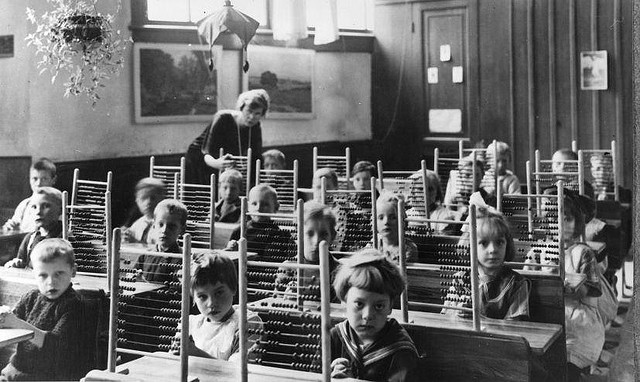
Scientific schooling System
Johann Gottlieb Fichte was the main driver of this Prussian schooling system. During the final decade of the 18th century, Fichte developed a radically systematic version of transcendental idealism, which he called Wissenchaftslehre “Doctrine of Scientific Knowledge.” It was ideas developed in this area of study that culminated into an education system scientific in nature. Fichte was influenced by philosophers such as John Locke who said “the human mind at birth is a ‘blank slate.’”[44] And Thomas Hobbes who suggests that the state of nature will degrade without law and morality. That man is led by his desire with a natural inclination for war and conflict. The quelling of such a nature, he believed was found through sovereign authority (an individual or assembly; monarch/leader or government) granted absolute power to ensure peace and security.[45]
The aim of this scientific education system was to control what a child was to learn, think about, and how long they could think about it. School bells were introduced as a means to control and condition children to move when told.
What do the Nazis and Modern Schooling Have in Common?
Fichte’s philosophy directly influenced the Prussian education system. In his words:
“The schools must fashion the person, and fashion him in such a way, that he simply cannot will otherwise than what you wish him to will… Education should aim at destroying free will so that after pupils are thus schooled, they will be incapable throughout the rest of their lives of thinking or acting otherwise than as their school masters would have wished … The social psychologist of the future will have a number of classes of school children on whom they will try different methods of producing an unshakable conviction that snow is black. When the technique has been perfected, every government that has been in charge of education for more than one generation will be able to control its subjects securely without the need of armies or policemen.”[46]
In 1807 in a Napoleon occupied Berlin, Fichte gave a series of famous addresses that spoke of the superiority of the German people above all others. This fueled German nationalism and was a catalyst for the mandated schooling system. He also wanted to expel Jews from Germany believing they would undermine Germany. Due to such views, he is considered the ‘spiritual father of neo-Nazism.’[47]
How an Awful Idea Swept a Nation
Horace Mann also known as “The Father of American Public Education,” became the head of the board of the newly created Board of Education in Massachusetts in 1837. It was through his research into education systems around the world, that he began to hear about Prussia; where the education system had proved a great success for the Prussia government. Mann and a team of other educators travelled to Prussia to see the system for themselves. Upon their returned to the US they rigorously advocated for the Prussian system to be brought to America. By 1880 most American schools were run by dignitaries who had left America to earn degrees in Prussia. In 1846 Mann’s wrote a report that led to the first state law that made it mandatory for children to go to school. Horace Mann stated that:
“The state is the father of children.”
His belief was that it was the states job to take responsibility for the children not their parents. He then supported the governor of Massachusetts in spreading the Prussian system across the entire state. The governor Edward Everett had been the first to receive a PhD from Prussia before he was given the governor title. The Prussian system quickly spread to the rest of the Northern states. After the Civil war (in 1867), Elizabeth Peabody, Mann’s sister, and her husband George Peabody created the Peabody Education fund, to help spread the Prussian model across the country. By 1900, most of the PhDs in America were trained in Prussia and laws were in place across America to establish and maintain mandatory schooling in every state. The Prussian system went on to infect the rest of Europe along with most other countries.
Final Thoughts
Prior to 1840 American Education was not perfect, but had a free and self-determined education system that worked. Family was above everything else then came religion, society, and schooling which was somewhat seen as supplementary rather than a necessity. Schooling became a necessity through law not the people’s choice. As the Industrial revolution took off and businesses began to boom, elite business men needed more workers to keep businesses running, and maintain their inflated lifestyle. Many of these industrial, state and country leaders, i.e. Rockefeller, Carnegie, Ford, J.P. Morgan, Woodrow Wilson etc… felt that the country’s wealth was best handled by the wealthy and elite who had the means, the determination, and the education to distribute the funds effectively to make life better for the masses. As Andrew Carnegie suggests in his paper the Gospel of Wealth.[48]
This Utopian idea, lead to the formation of the Board of Education, General Board of Education, Peabody Education Fund, and mandatory schooling using the Prussian system.
Disparity and Disproportionately Wealthy
There is no mistaking that modern mandatory schooling is not made to help individuals thrive. The history of schooling is paved with atrocities, manipulation and propaganda. In 1909 Wilson, then president of Princeton University, said the following to the New York City School Teachers Association:
“We want one class of persons to have a liberal education, and we want another class of persons, a very much larger class of necessity in every society, to forgo the privilege of a liberal education and fit themselves to perform specific difficult manual tasks.”[49]
Interestingly four years after making this statement, in 1913, Wilson was made the 28th American president. This 1909 statement of intention has very much come to fruition. The wealthy are disproportionately becoming wealthier, gaining more from economic growth than the greater population.[50] The elite, amass multigenerational wealth and live lavishly as the average man gets further away from ‘the American dream,’ and lives pay check to pay check barely affording the bare essentials.[51]
Just the Beginning
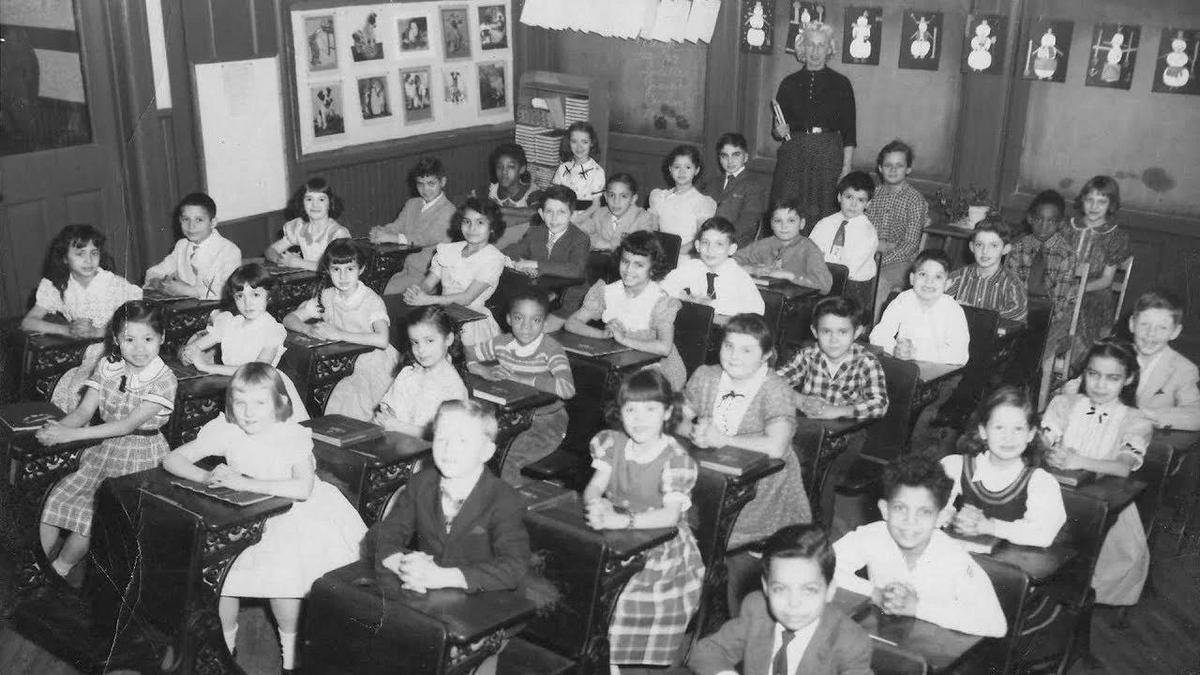
There can be no denying the horrifying history, and disparity caused by schooling. From the Native Indian American boarding schools to our modern-day mandatory schools, children are being stripped of their individuality, and fitted for their laborious jobs in factories and offices, for established corporate bodies. The compulsory schooling age has been expanded, so children spend not eight but twelve years, inside these Prussian inspired institutions. Little attention is paid to their interests, or talents; instead, children are taught with a one size fits all approach.
There are so many more details to this monster of an investigation. I look forward to divulging more to you as I uncover what you need to know about modern schooling, the government, how our society is run, and where so much of our knowledge has come from. You have the power to change the system. Your leadership and knowledge can lead the next generation into a new kind of future. Focused on a love of learning and not compliance.
References
[1] Kaestle, Carl F. “Common Schools Before the ‘Common School Revival’: New York Schooling in the 1790’s.” History of Education Quarterly 12, no. 4 (1973): 465–500. https://doi.org/10.2307/367341.
[2] Yeban, Jade J.D. “Compulsory Education Laws: Background” Find Law (2024) https://www.findlaw.com/education/education-options/compulsory-education-laws-background.html
[3] Curtis, Bruce. Building the Educational State: Canada West, 1836-1871. Altare Publishing (1988)
[4] Hamilton, Alexander., John Jay, and James Madison. The Federalist: a collection of essays. Written in favour of the new Constitution. as agreed upon by the Federal Convention: in two volumes. American Imprint Collection. 1788. https://www.loc.gov/item/09021562/. Ketcham, Ralph. The Anti-Federalist Papers and the Constitution Convention Debates. Signate Classics, 1986, First published 1787-1788.
[5] Finkelman, Paul. “James Madison and the Bill of Rights: A Reluctant Paternity.” The Supreme Court Review (1990): 301–47. http://www.jstor.org/stable/3109663
[6] Crews, Gordon. A, and Counts, M. Reid. Evolution of School Disturbance in America: Colonial Times to Modern Day. Bloomsbury Academic. (1997)
[7] Feir, Donna L. “The long-term effects of forcible assimilation policy: The case of Indian boarding schools.” Canadian Journal or Economics 49, no. 2(2016): 433-480 https://doi.org/10.1111/caje.12203
[8] Bombay A, Matheson K, Anisman H. “The intergenerational effects of Indian Residential Schools: implications for the concept of historical trauma.” Transcult Psychiatry. 51(3) (2014): 320-38. https://doi.org/10.1177/1363461513503380
[9] Adrienne Akins. “‘Next Time, Just Remember the Story’: Unlearning Empire in Silko’s Ceremony.” Studies in American Indian Literatures 24, no. 1 (2012): 1–14. (page 1) https://doi.org/10.5250/studamerindilite.24.1.0001
[10] Crawford, L. “James Monroe’s Trail of Tears.” The James Monroe Museum (2022) https://jamesmonroemuseum.umw.edu/2022/11/28/james-monroes-trail-of-tears/
[11] U.S. Congress. Indian Removal Act: Primary Documents in American History, collection. Library of Congress (1774-1875) https://www.loc.gov/item/llsl-v4/.
[12] Davis, Julie. “American Indian Boarding School Experiences: Recent Studies from Native Perspectives.” OAH Magazine of History 15, no. 2 (2001): 20–22. http://www.jstor.org/stable/25163421.
References Continued
[13] Crawford, L. “James Monroe’s Trail of Tears.” The J. M. Museum. (2022)
[14] Schleunes, Karl A. “Enlightenment, Reform, Reaction: The Schooling Revolution in Prussia.” Central European History 12, no. 4 (1979): 315–42. http://www.jstor.org/stable/4545874.
[15] Taylor, Frederick Winslow. The principles of scientific management. Noton & Company (1911).
[16] Callahan, Raymond E. Education and the Cult of Efficiency: A Study of the Social Forces That Have Shaped the Adminstration of the Public Schools. University of Chicago Press, (2010, Originally 1962)
[17] Bobbitt, John Franklin. “The elimination of waste in education.” The elementary school teacher 12, no. 6 (1912): 259-271. https://www.jstor.org/stable/993589
[18] Kim, Jonghun. “School accountability and standard-based education reform: The recall of social efficiency movement and scientific management.” International Journal of Educational Development 60 (2018):80-87 https://doi.org/10.1016/j.ijedudev.2017.11.003. Kliebard, Herbert M. The struggle for the American curriculum, 1893-1958. Routledge (2004)
[19] Thorndike, Edward L. Educational psychology. Columbia University (1913)
[20] Bagley, William Chandler. Classroom management: Its principles and technique. Macmillan, (1915) Kim, “School accountability and standard-based education reform,” (2018):80-87 https://doi.org/10.1016/j.ijedudev.2017.11.003
[22] Trujillo, Tina. “The modern cult of efficiency: Intermediary organizations and the new scientific management.” Educational Policy 28, no. 2 (2014): 207-232. https://doi.org/10.3102/0162373707309219
[21] Ibid
[23] Cuban, Larry. “A fundamental puzzle of school reform.” Schools as collaborative cultures: Creating the future now (1990): 71-77. https://eric.ed.gov/?id=EJ364789
[25] Hoffer, Eric. The True Believer. Harper Collins (1951)
[24] Ireh, Maduakolam. Scientific management still endures in education. ERIC Clearinghouse, 2016.
[26] Gatto, John T. The Underground History of American Education. Oxford University Press. (2001)
[27] Holt, John. Freedom and Beyond. Holt Associates (1972)
References Continued
[28] Madaus, George, Peter Airasian, and Thomas Kellaghan. “The Effects of Standardized Testing.” The Irish Journal of Education / Iris Eireannach an Oideachais 5, no. 2 (1971): 70–85. http://www.jstor.org/stable/30077184.
[29] Carnegie, Andrew. “The Gospel of Wealth.” North American Review (1889) https://www.carnegie.org/about/our-history/gospelofwealth/
[30] Kaestle, Carl F. “Common Schools before the ‘Common School Revival’: New York Schooling in the 1790’s.” History of Education Quarterly 12, no. 4 (1972): 465–500. https://doi.org/10.2307/367341.
[31] Ibid
[32] Methuen, Charlotte, ‘Education in the Reformation’, in Ulinka Rublack (ed.), The Oxford Handbook of the Protestant Reformations. Oxford Academic (2015), https://doi.org/10.1093/oxfordhb/9780199646920.013.20
[33] Nichols, Vance Everett. “Evangelical Christian School Movement.” Oxford Research Encyclopedia of Education (2022) https://oxfordre.com/education/view/10.1093/acrefore/9780190264093.001.0001/acrefore-9780190264093-e-1647.
[34] The KJV Bible. Proverbs 22:6.
[35] Wood, James E. “Religion and Public Education in Historical Perspective.” Journal of Church and State 14, no. 3 (1972): 397. http://www.jstor.org/stable/23914603.
[36] Boto, Carlota. “The Age of Enlightenment and Education.” Oxford Research Encyclopedia of Education. (2021) https://oxfordre.com/education/view/10.1093/acrefore/9780190264093.001.0001/acrefore-9780190264093-e-1469.
[37] Callahan, Education and the Cult of Efficiency, (1962): 46-52
[38] Ibid: 223
[39] Mencken, Henry. L. The Library. The American Mercury, vol. 1, no. 4 (1924): 504-505 https://hdl.handle.net/2027/uga1.32108058666671
[40] The Avalon Project, “Washington’s Farewell Address 1796,” Yale Law School: Lillian Goldman Law Library, http://avalon.law.yale.edu/18th_century/washing.asp.
[41] Gates, Frederick Taylor. The Country School of To-Morrow. New York city, General education board (1913): 6-10. https://www.loc.gov/item/e13000542/.
[41a] General Education Board. New York, General education board, Pdf. (1915) https://www.loc.gov/item/46028285/.
[42] Carnegie Foundation for the Advancement of Teaching. “Our Legacy.” https://www.carnegiefoundation.org/about/who_we_are/our-legacy/
References Continued
[43] Heyman, Neil M. “France Against Prussia: The Jena Campaign of 1806” Military Affairs 30, No. 4 (1966-1967): 186-198 https://www.jstor.org/stable/1985399. Gatto. ‘The Prussian Connection’ from The Underground History of American Education (2001). Paret. Peter. The Cognitive Challenge of War: Prussia 1806. Princeton University Press, 2009. http://www.jstor.org/stable/j.ctt7pghf.
[44] Locke, John. “An Essay Concerning Human Understanding” (1690)
[45] Hobbes, Thomas. Leviathan (1651)
[46] Russell, Bertrand. The Impact of Science on Society. Routledge an imprint of Taylor & Francis (1952)
[47] Redner, H. (2019). Dialectics of Classicism: The birth of Nazism from the spirit of Classicism. Thesis Eleven, 152(1), 19-37. https://doi.org/10.1177/0725513619850915
[48] Carnegie. “The Gospel of Wealth.”(1889)
[49] “A quote by Woodrow Wilson”. theysaidso.com, 2025. https://theysaidso.com/quote/woodrow-wilson-we-want-one-class-of-persons-to-have-a-liberal-education-and-we-w
[50] Kuhn, Moritz and Ríos-Rull, José-Víctor. “Income and Wealth Inequality in the United States: An Update Including the 2022 Wave.” National Bureau of Economic Research 33823 (2025) http://www.nber.org/papers/w33823
[51] Shiffer-Sebba, D. “Keeping the Family Fortune: How Bureaucratic Practices Preserve Elite Multigenerational Wealth.” American Sociological Review 90, no. 2, (2025):291-317. https://doi.org/10.1177/00031224251319001
Join the movement to rethink education
Get ideas, stories, and tools for raising free thinkers and world changers.
We hate SPAM. We will never sell your information, for any reason.