Educational History Exposed
Learn how the modern school system was designed, who it was built to serve, and why it’s failing so many children today.
Schooling and its many failings aren’t an accident. In many ways, school works extremely well for what it was originally designed to do.
Here you’ll find our research into the history of education, especially the American public school system, so you can arm yourself with the truth and help spearhead a better path for future generations.

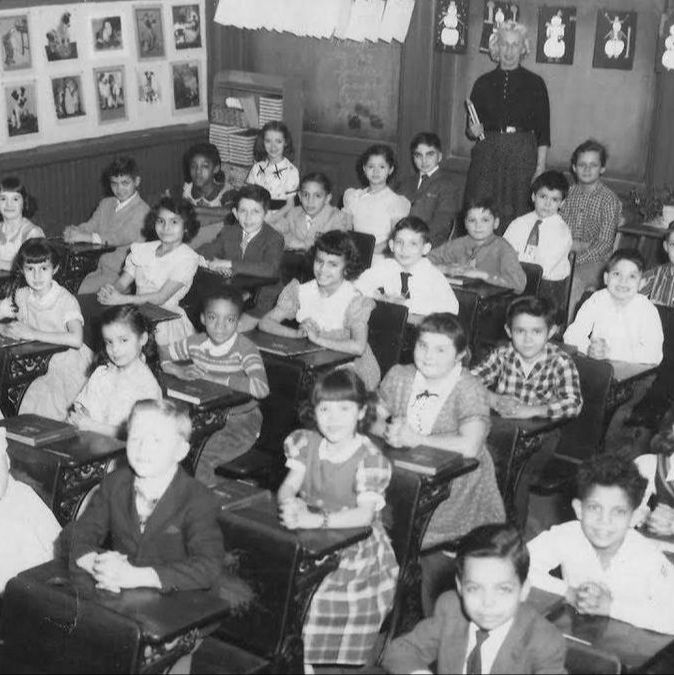
Why understanding the history of school changes everything
If you grew up feeling “lazy”, “not academic”, or like you never quite fit, it probably wasn’t you. It was the system.
The modern school system:
- Was shaped in the industrial era to create obedient workers, not free individuals
- Has roots in control, compliance, and standardisation, not creativity and critical thinking
- Has been used as a tool of oppression and assimilation, especially for marginalised groups
With the rise of AI and rapid change, this kind of schooling is more outdated and dangerous than ever.
When you see where school came from, it becomes much easier to imagine and build something better.
Our research at Educational Heart
At Educational Heart, we’ve spent years carefully researching the origins and development of the public schooling system, with a particular focus on the American model.
What we found was often shocking and difficult to read, but necessary to understand.
Our aim with this research is to:
- Bring hidden history into the light
- Help parents, educators, and young people see school more clearly
- Support the movement toward more humane, truthful, and life‑giving education
Below is a simplified timeline of key moments that shaped modern schooling. It is not exhaustive, but it highlights crucial turning points you need to know about.
Timeline: Key moments in the history of schooling
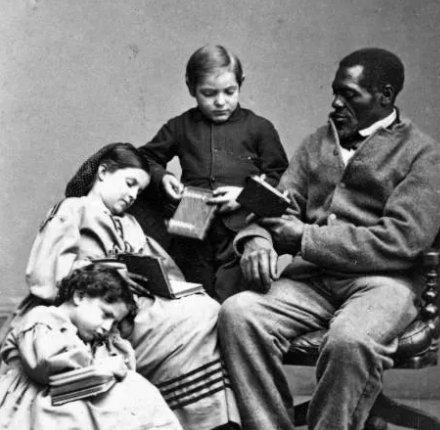
1740 – Literacy outlawed for enslaved people
Anti‑literacy laws spread across the American South, making it illegal for enslaved people, predominantly African Americans, to learn to read or write.
Anyone caught learning, or teaching an enslaved person, could be punished by law, fined, or jailed.
Schooling and access to learning have never been neutral. They have been used as tools to control who gets knowledge and who doesn’t.
Before 1800 – Education before the industrial revolution
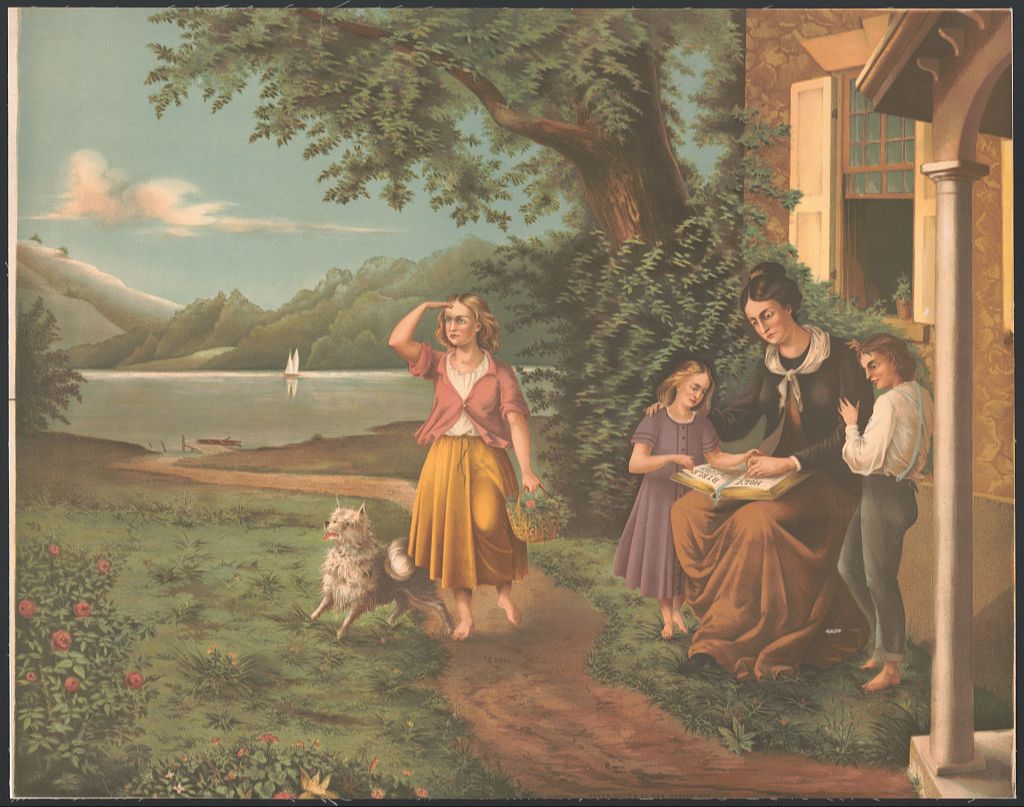
Before industrialisation, schooling was usually supplementary to family life, church, and real‑world opportunities such as apprenticeships and employment.
- Schooling was not always seen as necessary for success
- Many schools were private and expensive
- Some more affordable options existed, like free schools for the poor in New York in the 1790s and schools for the working class
Education was more diverse and often more closely tied to real life than the model that later took over.
1806 – The Prussian system
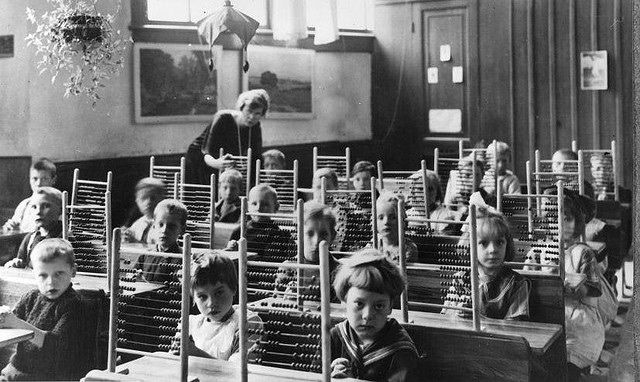
After Prussia’s loss to Napoleon, leaders blamed defeat on a disobedient, free‑thinking army.
Johann Gottlieb Fichte developed what became known as the Prussian schooling model, an 8‑year mandatory system designed to shape citizens who would obey orders.
The goal was, in his own words, to move toward “destroying free will” so the government could control its subjects without relying solely on armies or police.
This model of compulsory, centralised schooling became hugely influential worldwide.
1837 – Importing the Prussian model to America
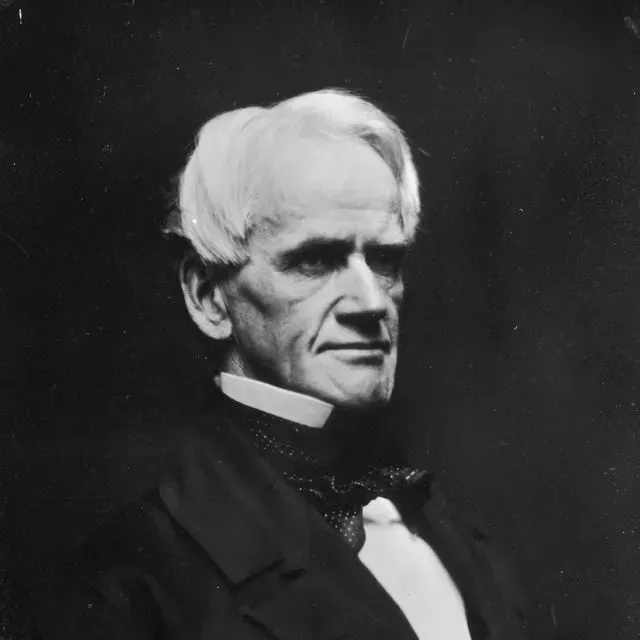
In 1837, Horace Mann, often called “The Father of American Public Education”, became head of the newly created Massachusetts Board of Education.
After studying education systems overseas, Mann and a team of educators travelled to Prussia. They were impressed by how effective the system was for the Prussian government.
On returning to the US, Mann strongly advocated for adopting the Prussian model.
In 1846, one of his reports helped lead to the first state law making school attendance mandatory.
1852 – First compulsory schooling law in the United States
In 1852, Massachusetts became the first US state to enact a Compulsory Education Law.
Governor Edward Everett had earlier earned a PhD in Prussia before becoming governor, and he supported this shift.
From there, the Prussian‑inspired schooling model spread quickly throughout the northern states.
1867 – Funding the spread of the system
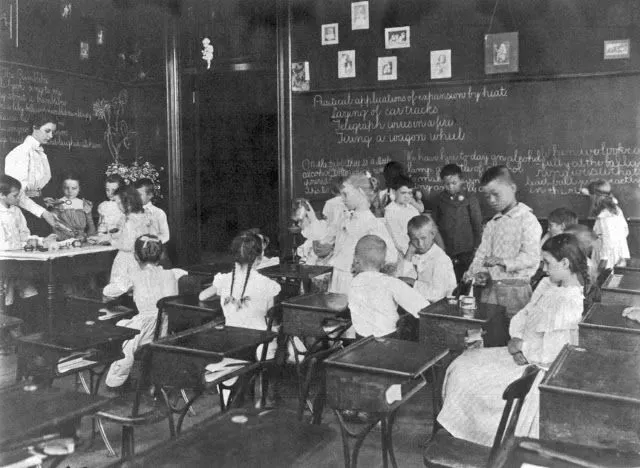
After the Civil War, Elizabeth Peabody (Horace Mann’s sister) and her husband George Peabody created the Peabody Education Fund.
The fund played a significant role in spreading the Prussian model of schooling across more of the United States.
1880s – Prussian‑trained leadership
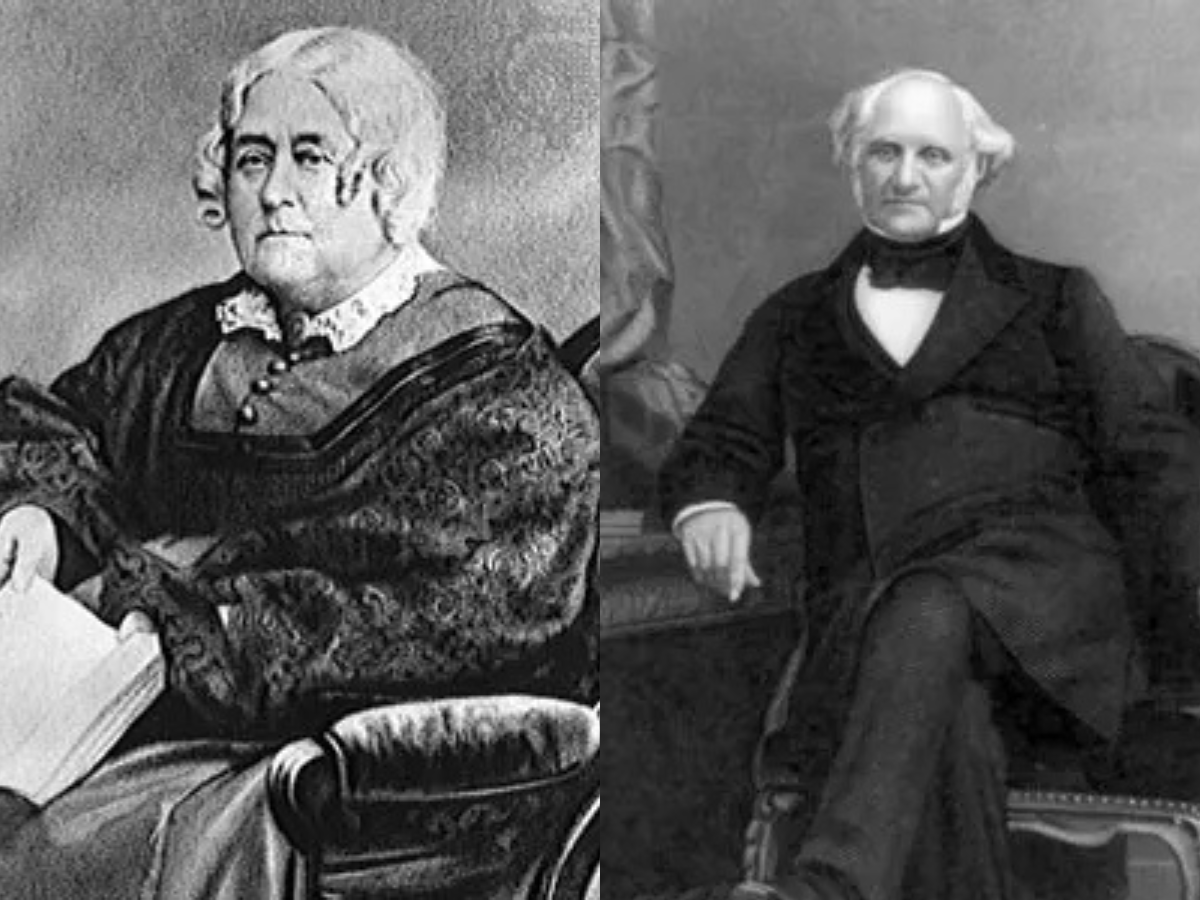
By the late 1800s, many American schools were run by dignitaries and leaders who had travelled to Prussia to earn their degrees.
This ensured that the mindset and methods of the Prussian system were embedded deeply into American schooling.
1897 – Native cultural genocide through schooling
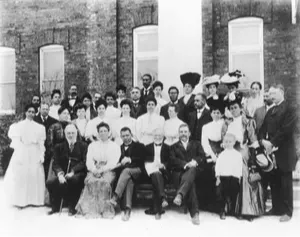
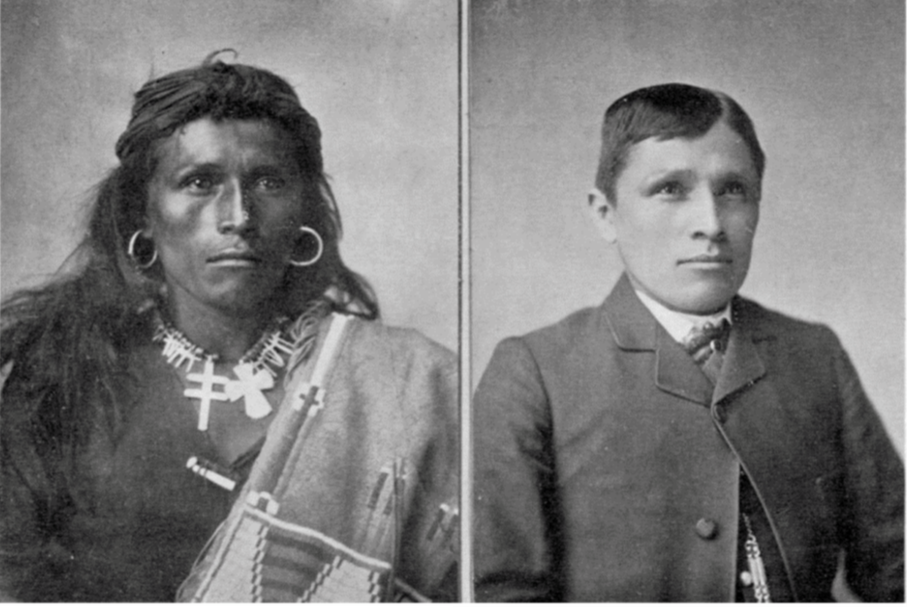
In 1897, US Army Lieutenant Richard Henry Pratt founded the Carlisle Indian Industrial School.
These and similar institutions aimed to “re‑educate” and assimilate Native American children.
On arrival, Native children:
- Were photographed, then stripped of their tribal clothing and personal items
- Had their hair cut and were put into military‑style uniforms (boys) or colonial dresses and corsets (girls)
- Were given new Anglican names and re‑photographed
The goal was to erase culture and identity through schooling. This is a stark example of how education has been used as a weapon.
1902 – The General Education Board
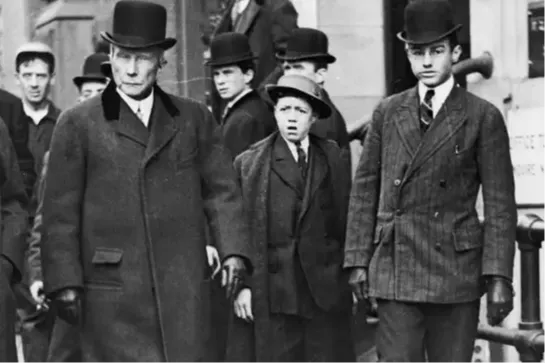
In 1902, industrialist John D. Rockefeller created the General Education Board with funding of around $129 million (in early 1900s terms, an enormous sum).
The Board played a major role in shaping American schooling for the needs of industry and large‑scale economic interests, rather than the flourishing of individual children.
1905 – The Carnegie Foundation for the Advancement of Teaching
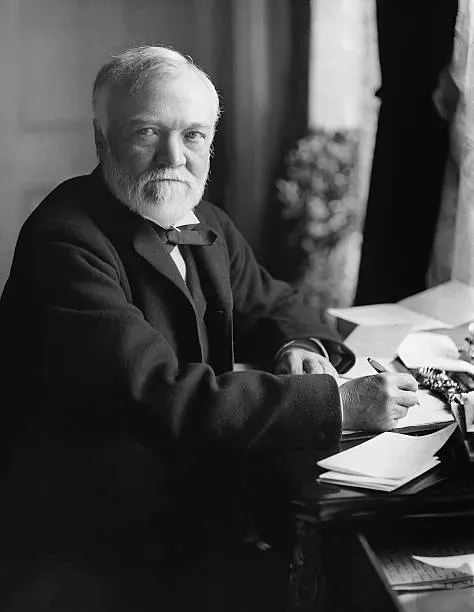
The Carnegie Foundation for the Advancement of Teaching was founded, and the following year was chartered by an Act of Congress as an independent policy and research centre.
Its stated purpose was to:
“do and perform all things necessary to encourage, uphold, and dignify the profession of the teacher and the cause of higher education.”
Foundations like Carnegie’s played a powerful role in shaping teacher training, educational policy, and what counted as “legitimate” education in the 20th century.
1909 – Two classes of education
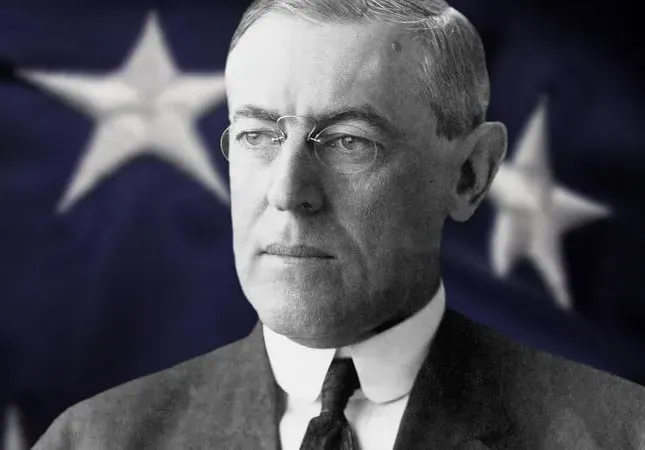
In 1909, Woodrow Wilson, then president of Princeton University, addressed the New York City School Teachers Association and said:
“We want one class of persons to have a liberal education, and we want another class of persons, a very much larger class of necessity in every society, to forgo the privilege of a liberal education and fit themselves to perform specific difficult manual tasks.”
Just four years later, in 1913, Wilson became the 28th President of the United States.
This quote reveals how education was being openly thought about in terms of separate tracks for social classes: one for thinkers, one for workers.
1913 – A horrifying vision for schooling
Reverend Frederick T. Gates, business advisor to John D. Rockefeller, described his vision for the population:
“In our dream we have limitless resources, and the people yield themselves with perfect docility to our moulding hand...
We shall not try to make these people or any of their children into philosophers or men of learning or of science. We are not to raise up among them authors, orators, poets, or men of letters...
we will organize our children into a little community and teach them to do in a perfect way the things their fathers and mothers are doing in an imperfect way, in the home, in the shop, on the farm.”
This is a stark statement of intent: schooling as a tool to create compliant workers, not independent thinkers, creators, or leaders.

1914 – Early warnings from within education
At the 1914 annual meeting in St. Paul, Minnesota, the Normal School Section of the National Education Association (NEA) passed a resolution expressing alarm at the influence of private foundations.
An excerpt reads:
“We view with alarm the activity of the Carnegie and Rockefeller Foundations — agencies not in any way responsible to the people — in their efforts to control the policies of our State educational institutions, to fashion after their conception and to standardize our courses of study...”
Even over a century ago, educators were warning that powerful, unelected foundations were reshaping schooling according to their own vision.
1918 – Compulsory elementary education in all states
By 1918, every US state required students to complete elementary school.
This made compulsory schooling a nationwide reality, standardising the experience of childhood in a way that had never existed before.
Later, in 1932, the “Eight‑Year Study” program was implemented, pushing all children into at least eight years of structured study. This work was largely funded by the Carnegie Corporation of New York and the General Education Board, cementing the role of major foundations in steering education.
1946 – Massive funding for education reform
In 1946, the Rockefeller Foundation granted the General Education Board around $7.5 billion (in contemporary value, an enormous sum) to continue its efforts in education reform across the United States.
This level of funding helped lock in a vision of schooling aligned with industrial and economic interests, rather than the unique potential of each child.
From understanding the past to changing the future
History only matters if we let it change what we do next.
If this research resonates with you and you want to be part of building something different, here are a few next steps:
Read the books
Explore the Heal From School, Lead Your Family, Educate For Real Life series to understand your own story, strengthen your family culture, and rethink education for your children.

Join the Educational Heart Membership
Get access to EDH Social, Parents Hub, Children’s Hub+, and the Unschool Your Mind course to put these insights into daily practice in your home.

Subscribe to the newsletter
Receive ongoing reflections, research highlights, and practical ideas for raising free thinkers and world changers.