
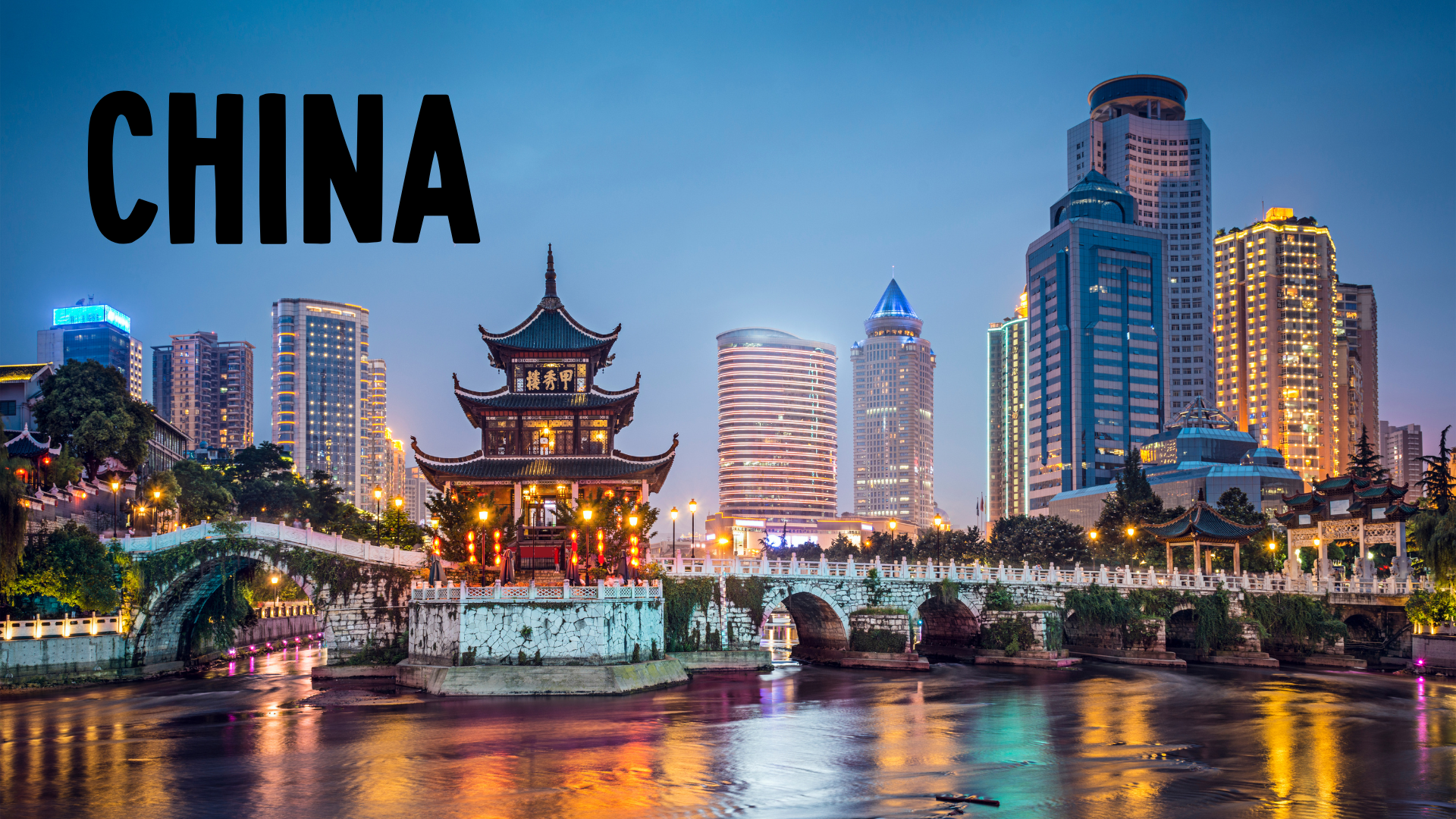
What is China Known For?
Hello world explorers! China was known as the most populated country in the world with a population of 1,414,243,589 but as of February 22nd 2026 it’s now second to India with over 1,476,625,576 people. (According to Worldometer). When you think of China, you might think of Chinese New Year, special fried rice, dragons, pandas and pretty lanterns. Maybe you imagine their symbols or ancient clothing that looked elegant and decadent. China is widely regarded as the world’s longest continuous civilization in the world, with over 3,500 years of recorded history and a cultural and political identity that has persisted through dynastic changes, invasions, and modern transformations.

Learn

Project Prompts

Quiz Time

Story

Watch

How Old is the Chinese Culture?
There has been disputes about China’s civilizations being even older, 5,000 years, but this is yet to be confirmed by historians and is unlikely to be. The Xia Dynasty for instance, traditionally dated to 2070 BCE, remains unproven by archaeology and is considered semi-legendary by most scholars. Legendary meaning orally passed down through tales and narratives, some historians even believe that these ‘earlier’ dynasties were made up by emperors as cautionary tales to show their people how great they are as a leader in comparison or to show the strength of their Chinese heritage.
What is the Wildlife Like in China?
China has an extremely diverse ecosystem, with 17 percent of mammals and 36 percent of reptiles found nowhere else on earth. China vast territory encompasses practically every climate and habitat on earth, from frigid Siberian taiga to tropical rainforest. Many animals in China are going extinct primarily due to habitat loss, fragmentation, and degradation caused by rapid urbanization, infrastructure development, logging, and agricultural expansion. Human activities such as pollution, overfishing, poaching, and illegal wildlife trade—especially for traditional Chinese medicine—also significantly threaten species. The Giant Panda for instance, a much loved, iconic animal of china, that only lives in Southwest China and nowhere else on Earth, has been hunted so heavily that only about 1,600 remain in the wild. The increasing human population and economic development have intensified pressure on natural ecosystems, leading to a sharp decline in biodiversity. The Chinese government has reportedly set up 1,200 reserves to protect plant and animal species. Here are a few of the native animals you'll likely see in China...
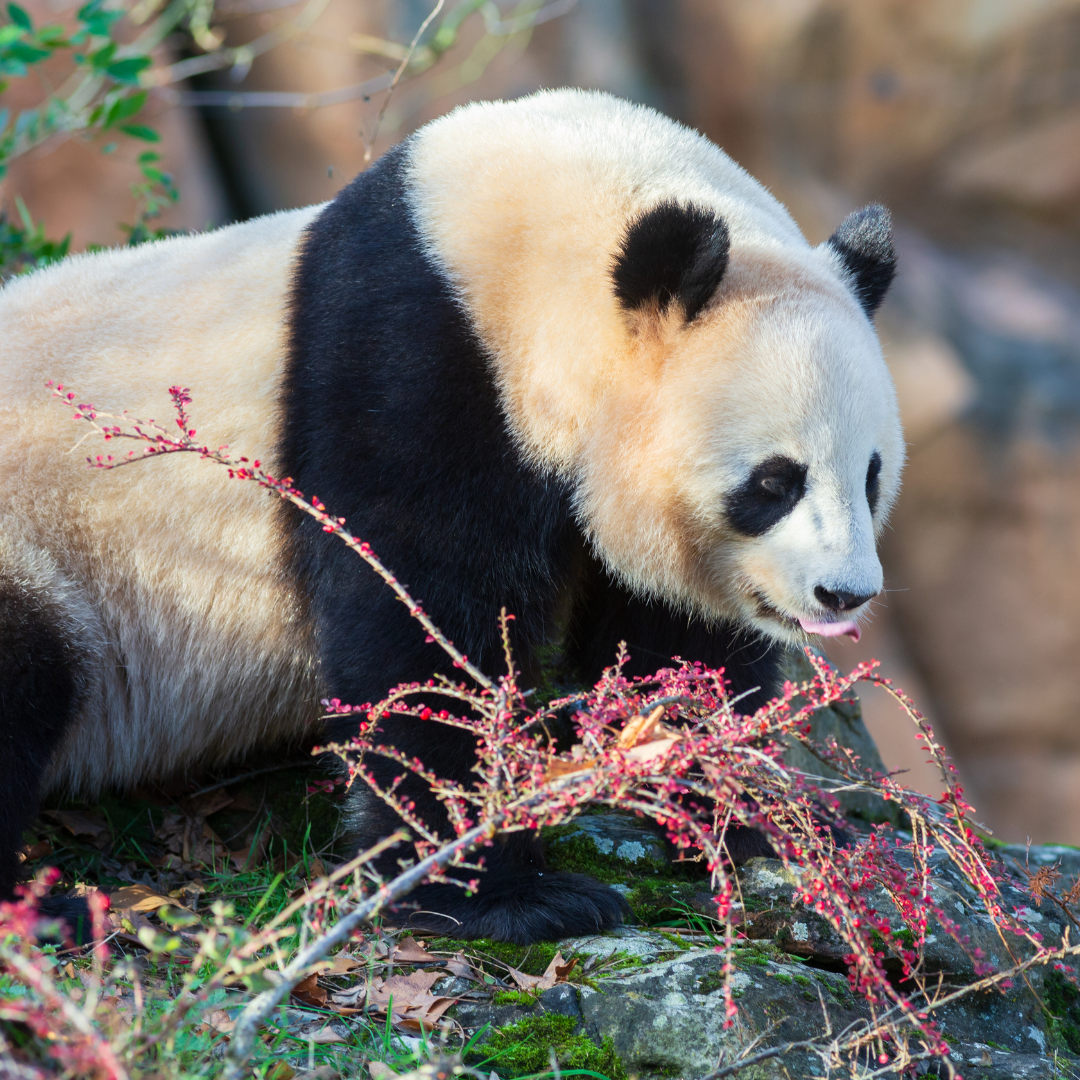
Giant Panda
Iconic black-and-white bear known for its bamboo diet and conservation status.
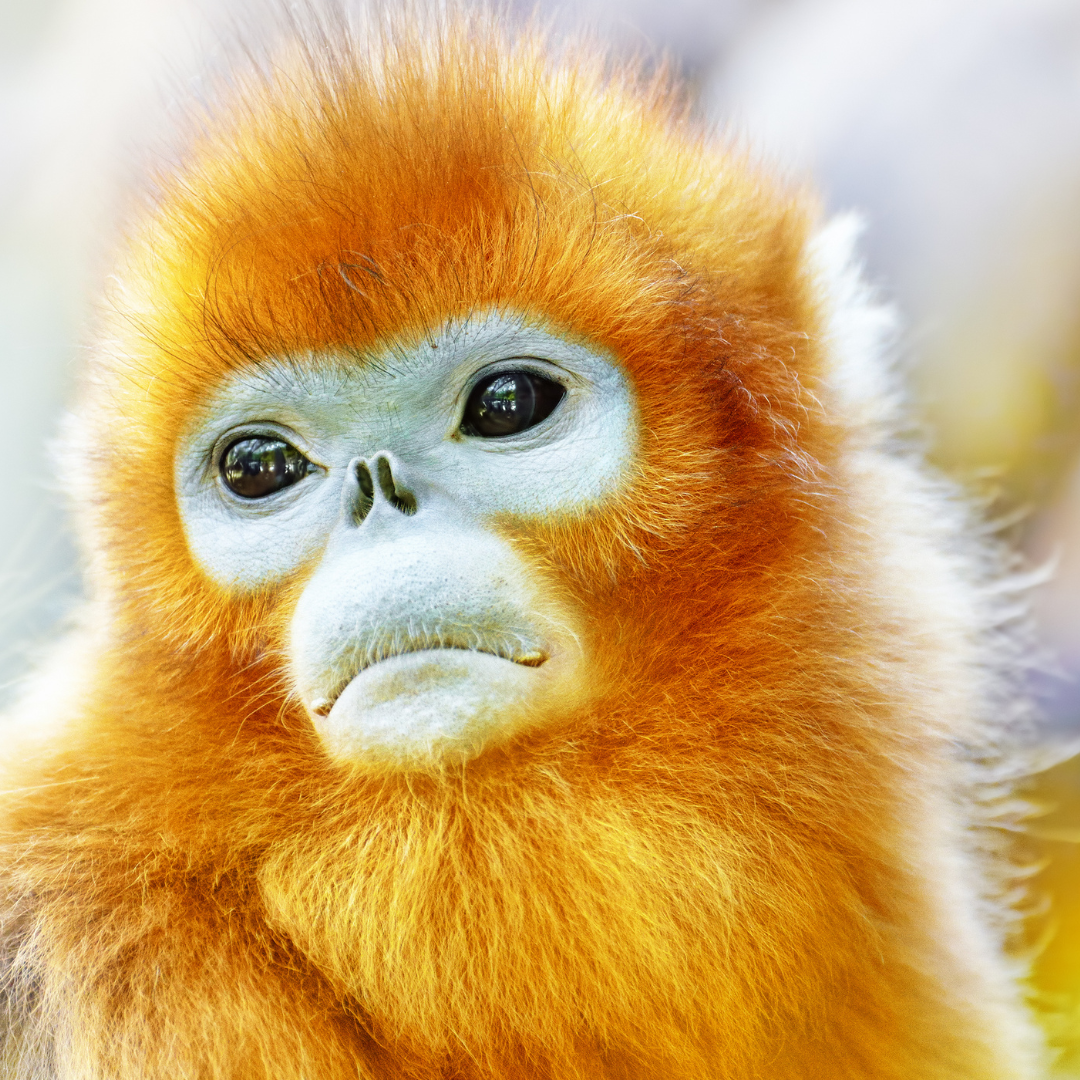
Golden Snub-Nosed Monkey
Rare primate with distinctive upturned noses, living in cold mountain forests.
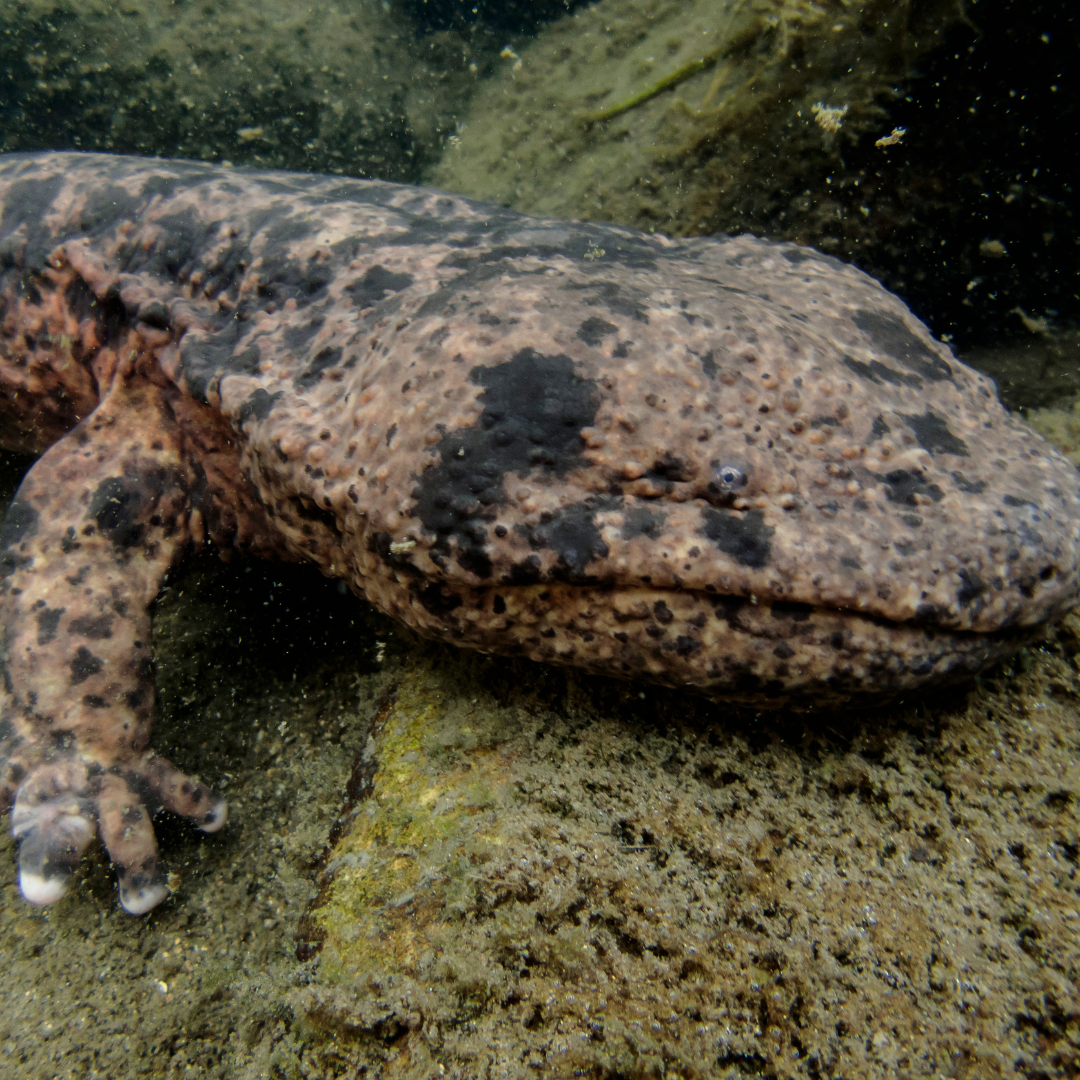
Chinese Giant Salamander
The world’s largest amphibian, a living fossil found in rivers.
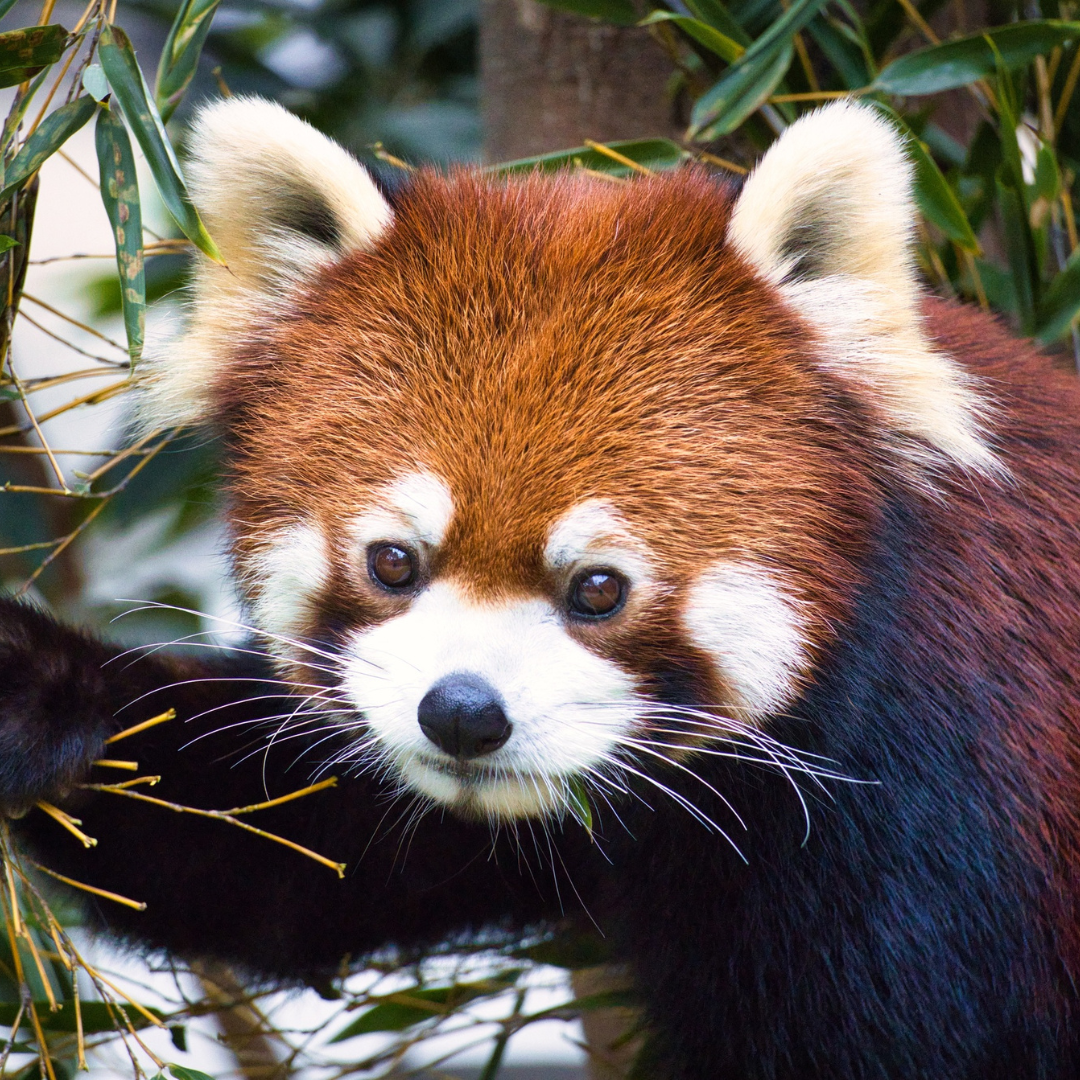
Red Panda
Critically endangered, due to habitat loss, fragmentation, and poaching.
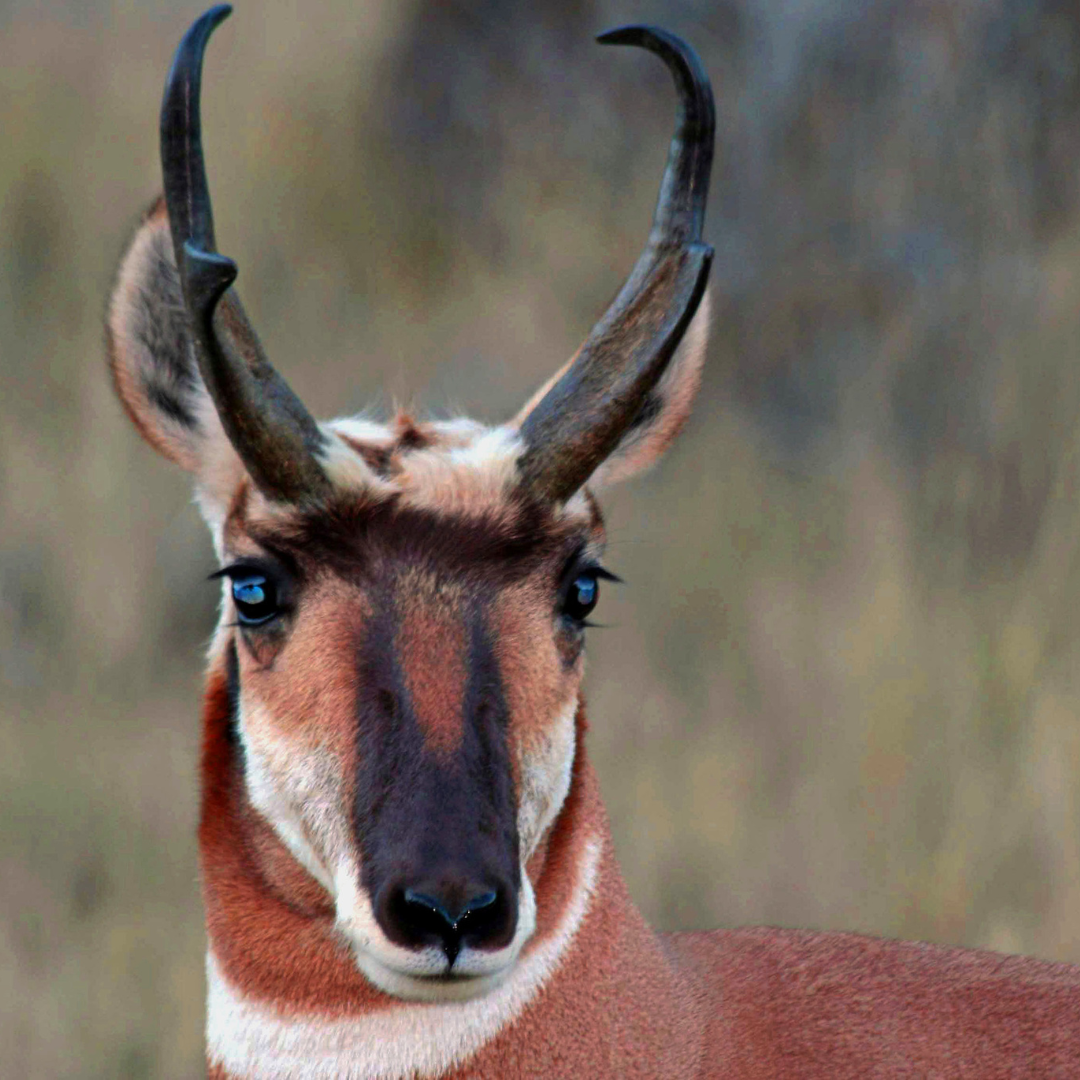
Tibetan Antelope (chiru)
Endures extreme Himalayan conditions, prized for its fine wool.
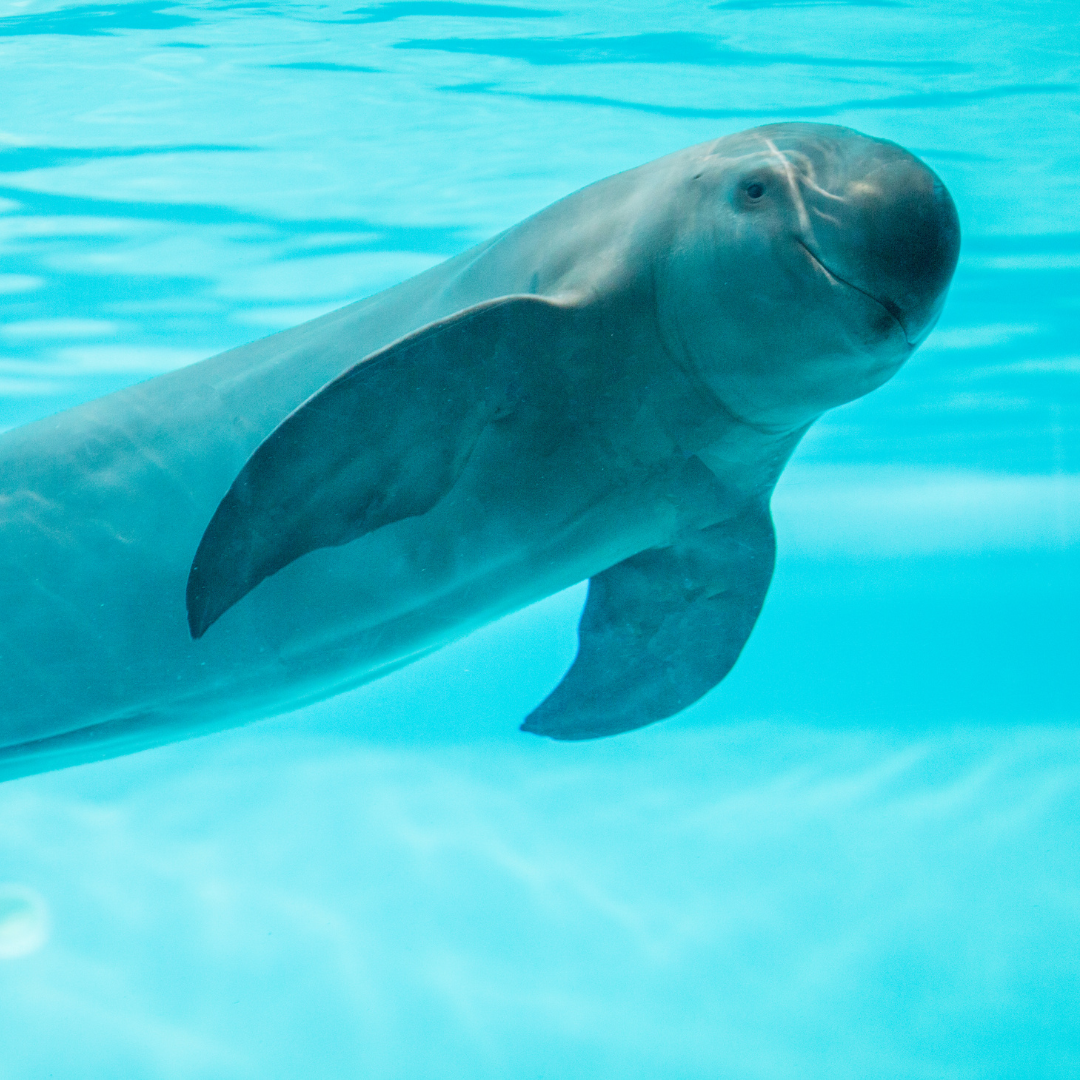
Yangtze Finless Porpoise
Known as the “smiling angel,” this playful freshwater dolphin is endangered.
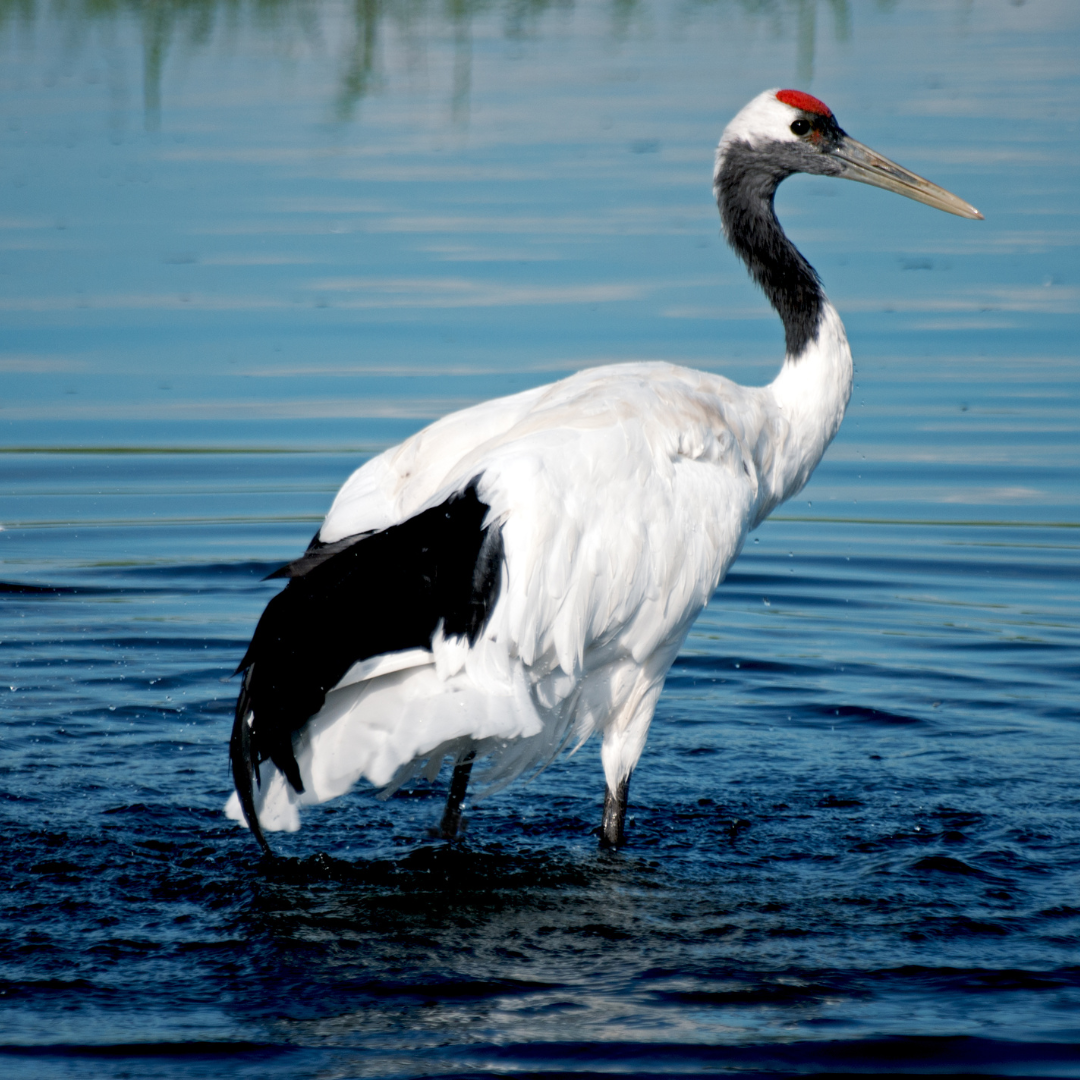
Red-Crowned Crane
A symbol of longevity, found in wetlands with striking white plumage and red crown.
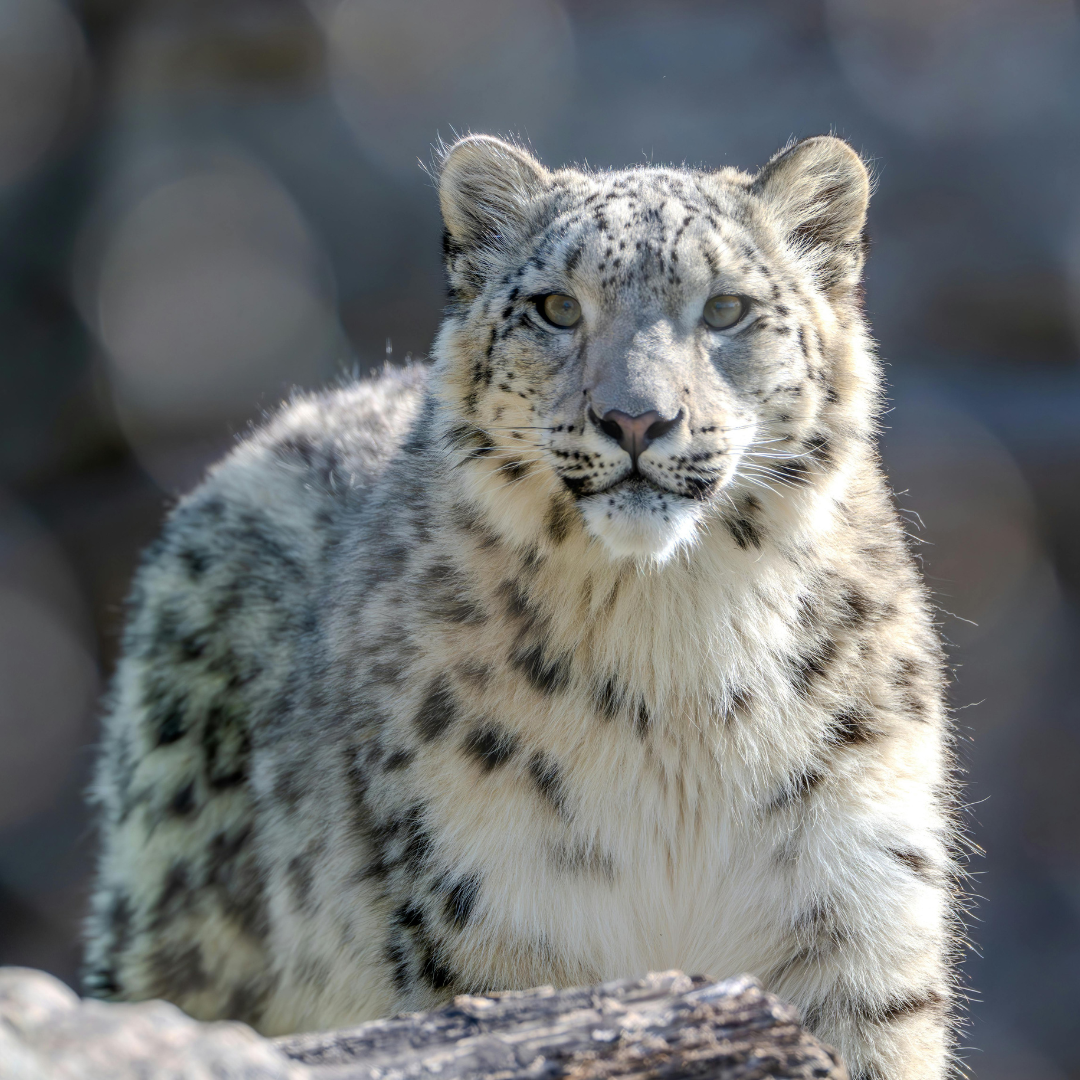
Snow Leopard
Elusive predator of remote mountain regions.
Abundant Culture
China is a multi-ethnic and multi-religious country with 56 officially recognized ethnic groups, the largest being the Han Chinese (91.1%), followed by minorities such as the Zhuang, Hui, Manchu, Uygur, Miao, Yi, Mongolian, Tibetan, Buyi, Korean, and others.
Major Religions in China
-
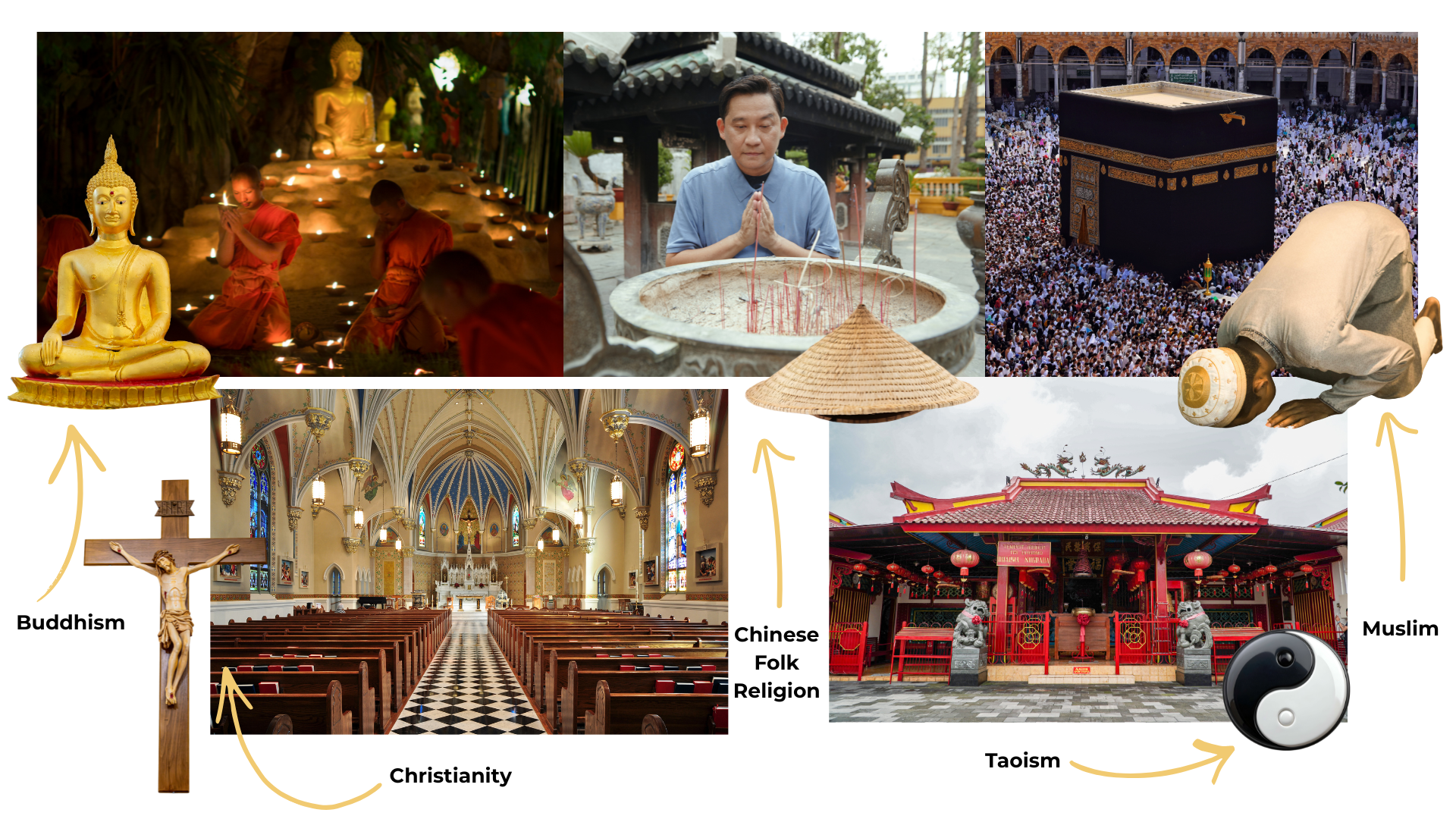
Buddhism: Practiced by 18.2% of the population (U.S. 2021 estimate), with strong presence among Han Chinese and Tibetan, Mongolian, and other ethnic groups. Tibetan Buddhism (Lamaism) is dominant in Tibet and Qinghai.
-
Christianity: Includes 5.1% of the population (U.S. 2021 estimate), comprising Protestants (3.34%) and Catholics (0.68%). Christianity is growing rapidly, especially in rural areas.
-
Islam: Followed by 1.8% of the population (U.S. 2021 estimate), primarily by Hui, Uyghur, Kazak, Dongxiang, and other Muslim ethnic groups. It is concentrated in Xinjiang, Ningxia, Gansu, and Qinghai.
-
Taoism (Daoism): Considered a native Chinese with 0.40% adherents (World Religion Database, 2025). It remains influential in rural areas and among Han Chinese.
-
Chinese Folk Religion (Ancestor Worship & Local Traditions): Practiced by 21.9% of the population (U.S. 2021 estimate), often blended with Buddhism and Taoism. It includes ancestor veneration, festivals, and rituals tied to the lunar calendar.
-
Other Religions: Smaller communities include Hindus (<0.1%), Jews (<0.1%), Baha'is (0.00%), and spiritist or ethnic minority beliefs (e.g., nature worship among the Dulong, Nu, and Lhoba).
Ethnicity and Religion Correlation
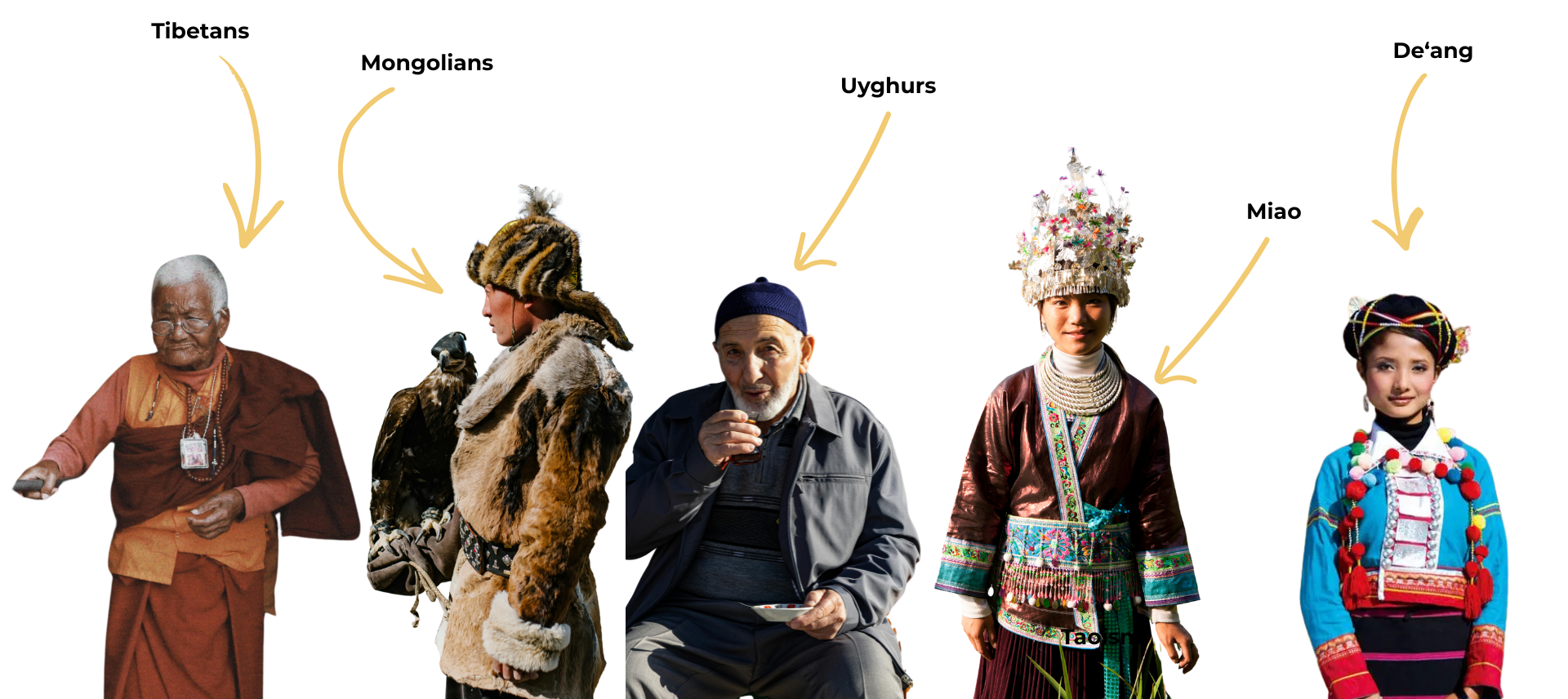
- Tibetans, Mongolians, and others in Tibet, Inner Mongolia, and Qinghai follow Tibetan Buddhism.
- Uyghurs and Hui in Xinjiang and Ningxia are predominantly Sunni Muslims.
- Dai, Brown, and De'ang ethnic groups practice Theravada Buddhism.
- Yi, Miao, Lahu, and others have varying Christian affiliations.
- Some ethnic groups, such as the Dulong, Nu, and Lhoba, still practice primitive animist or shamanistic traditions.
Despite being officially atheist, over 80% of the population participates in religious or spiritual practices, often through cultural traditions rather than formal religious institutions.
More about some of these religions here
Here is a little representation of each religion:
How is China Run?
China is a one-party socialist state led by the Chinese Communist Party (CCP), operating under a system known as a "party-state". The CCP maintains ultimate authority over all branches of government, the military, and state-owned enterprises, with power centralized through the principle of democratic centralism. They have a president though his role is mainly ceremonial meaning the real power resides not with the president but with the General Secretary of the CCP, Xi Jinping who is also the chairman of the Central Military Commission (CMC) which controls the People’s Liberation Army (PLA). China is officially named a People's Republic of China, but its form of government is a communist state. The people lack freedom, they're under heavy surveillance and have a and if they speak out against their government they're likely to go missing, foreigners have been known to get thrown out of the country for trying to report on the living conditions of the poor, homeless and everyday Chinese resident.
What is a Social Credit System and What Does it Mean for Individuals?
China’s Social Credit System (SCS) is a multifaceted framework designed to assess the trustworthiness of individuals, businesses, and government entities through a combination of financial, legal, and behavioural data. It is not a single, unified national score but rather a patchwork of interconnected systems developed across different levels of government and sectors.
Key Components and Functioning:
-
Government Oversight: Managed by the National Development and Reform Commission (NDRC), People's Bank of China (PBOC), and the Supreme People's Court (SPC), the system integrates financial credit data with regulatory compliance and behavioural records.
-
Reward and Punishment Mechanisms:
-
High scores can lead to benefits like easier access to loans, travel privileges, priority in school admissions, and tax breaks.
-
Low scores or blacklisting may result in travel bans, restricted access to public services, slower internet speeds, or exclusion from certain jobs.
-
-
Data Sources: Includes financial records, criminal history, court judgments, online behaviour, traffic violations, waste sorting compliance, and even social contributions like volunteering or blood donation.
-
Local Experimentation: Over 19 cities in China operate local systems that track behaviour and apply rewards or penalties. Examples include Shanghai’s elderly visitation rules, Beijing’s public transit etiquette monitoring, and Shenzhen’s jaywalking penalties.
What do you think the effects are on individual liberty? Do you think there are ways this kind of system could be harmful to Chinese people?
Additionally, popular social media platforms have been banned in China such as Instagram, YouTube and WhatsApp, with the primary reason being the governments inability to see what people are viewing and take down any videos or posts that might criticize the government. In 2023, a K-pop band member from BTS spoke out on live stream saying that he couldn't perform in China, he was also joined by other artists who have also been unable to go to China.
How Many People Live in Caves?
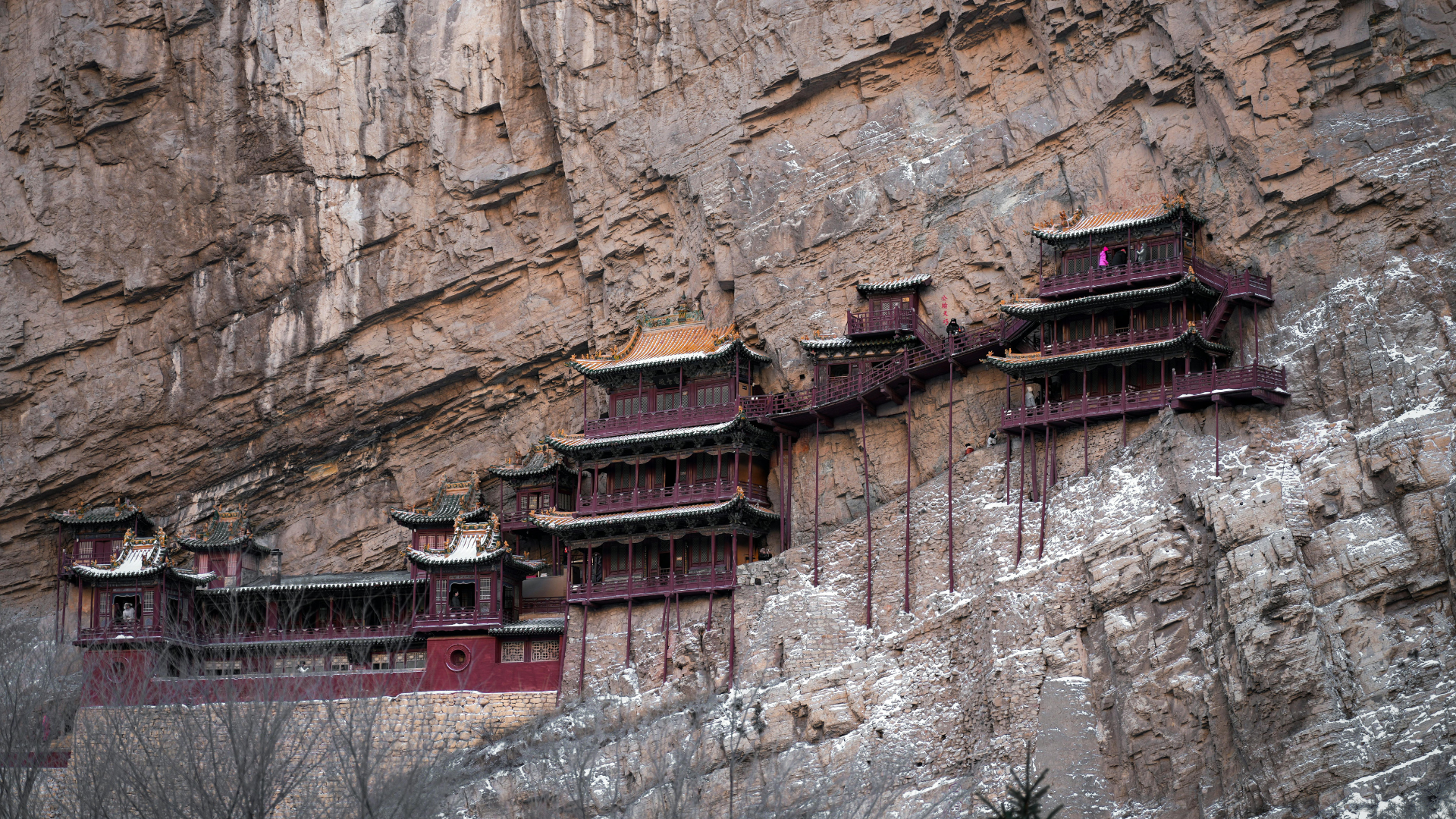
Around 3 million people live in caves in China's Shanxi region. Such cave dwellings include stone beds with spaces underneath for fires in the winter time. According to some sources there used to be more people living in caves but the numbers have lowered. Here is an image of the Hanging Temple in Shanxi below.
Where is China and How Big is it?
China stretches 3,100 miles East to West and 3,400 miles from North to South. It is the third largest country in the world with widely varying landscapes including mountainous, high plateaus, sandy deserts, and dense forests. Mount Everest is the highest mountain on Earth above sea level, standing at 8,848.86 meters (29,031 feet) according to a 2020 joint measurement by China and Nepal. Their major rivers are Yangtse, and Yellow river. Yangtse is the third largest river in the world at 3,915 miles long.
The official language in China is standard Chinese, Mandarin. Their money is Yuan. Their Major mountain range is the Himalaya.
What are the Largest Landmarks in China?
The most renowned landmark, stretching approximately 13,170 miles across northern China, it is one of the world’s largest ancient military defence structures. For a while people believed that you could see the the Great Wall of China from space but, no, it is not visible from space with the naked eye under normal conditions. This is a widely held myth that has been debunked by astronauts and scientific analysis. Below is a diagram of the different parts of the Great Wall of China...
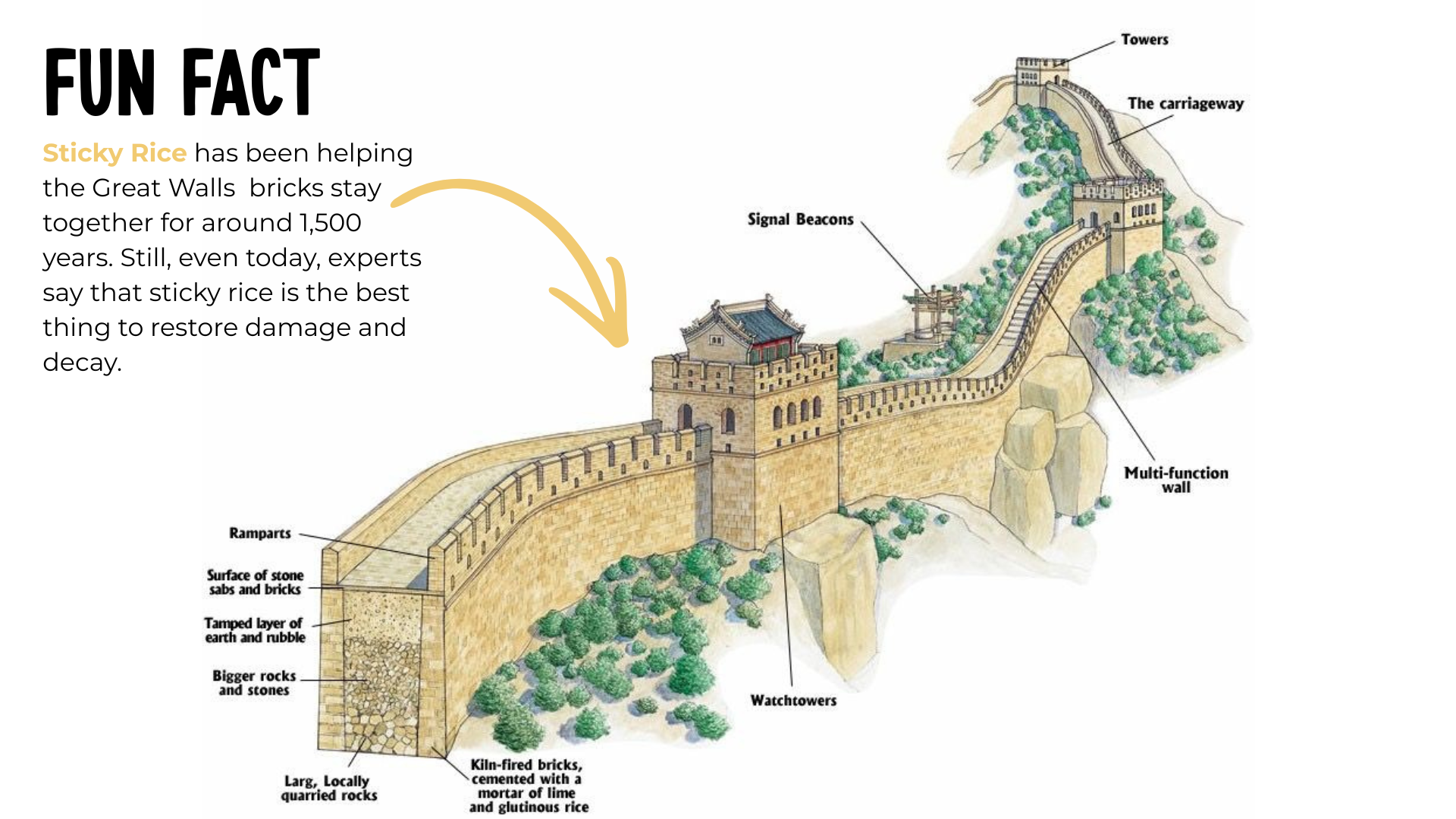
Image from Albert Lee here
What is the Biggest City in China?
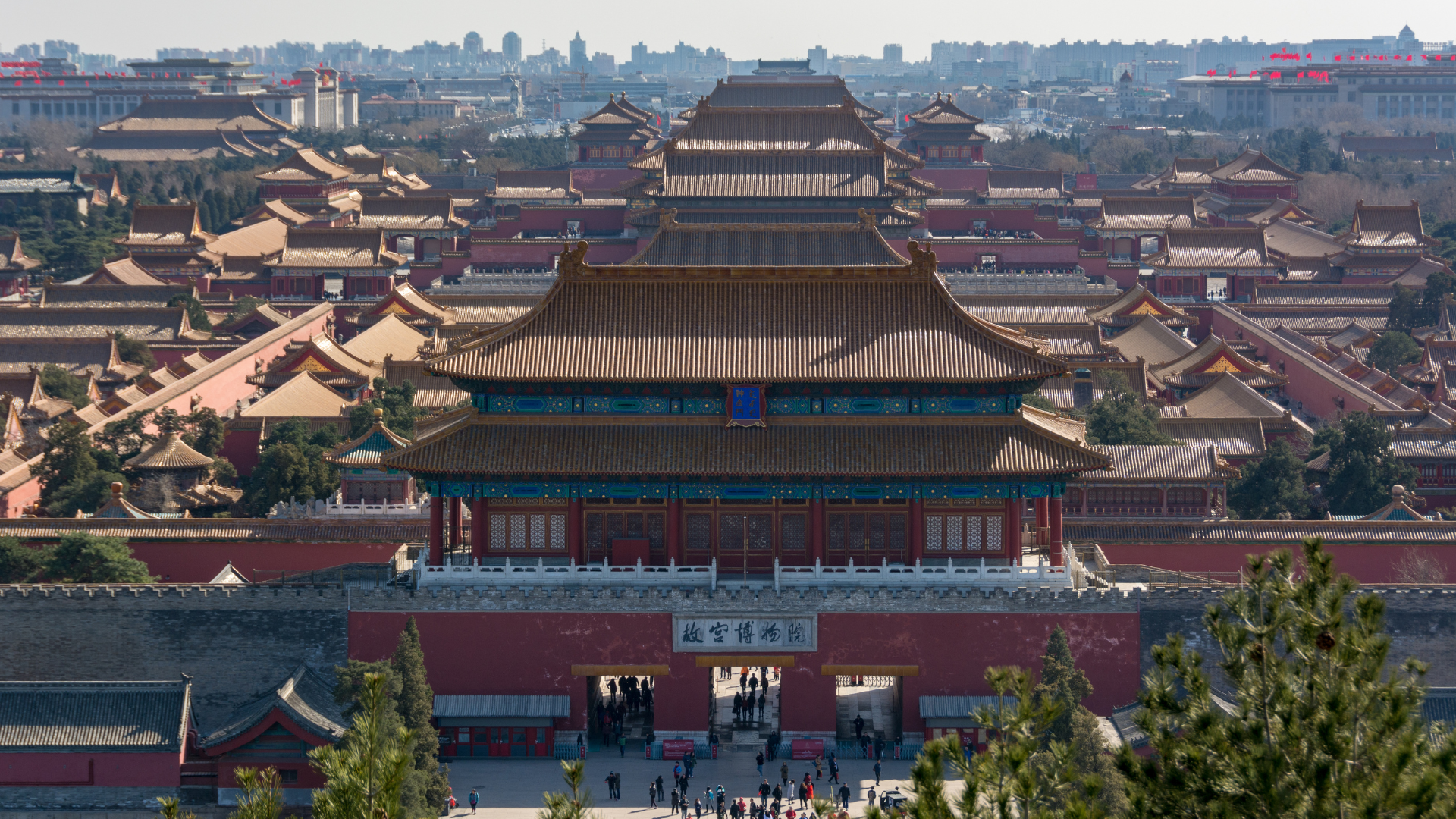
Forbidden City (Beijing) – This vast imperial palace complex covers about 7.7 million square feet, making it the largest and best-preserved ancient palace in the world. It served as the political and ceremonial center of China for nearly 500 years.
Project Prompts and Ideas
- Write an article on a China
- Write a short story about living in China or traveling along the great wall.
- Write a news report on the discovery of the Terracotta Army
- Write a brochure pamphlet convincing someone to visit China (This can be a parody using the political issues that are happening there like what happened with the protests in Hong Kong or the people living in slum like conditions just out of the city areas.)
- Write a poem about Chinese culture (do some additional research on a dynasty or old Chinese fables)
- Write a short story/diary entry by an emperor or empress.
- You're a emperor write your own laws. Consider: How you will act when a law is broken?
- You're a emperor make a poster advertising a need for more servants
- Create a menu for a street-food vender in China.
- Create your own diagram of a Chinese building on an A3 piece of paper, label the details and describe each part.
If you're a Children's Hub + Member you can submit your project here > for marking and if you have permission you can tick the option to share it in our member projects area so other children in the membership can be inspired by your work too.

Great Videos About Pirates
Here are a select few videos about pirates and what they got up to in their most notorious time.